
Name Plate Material Guide: Acrylic, Engineered Wood or Steel?

Updated 15 November 2026: revised material comparisons and product examples.
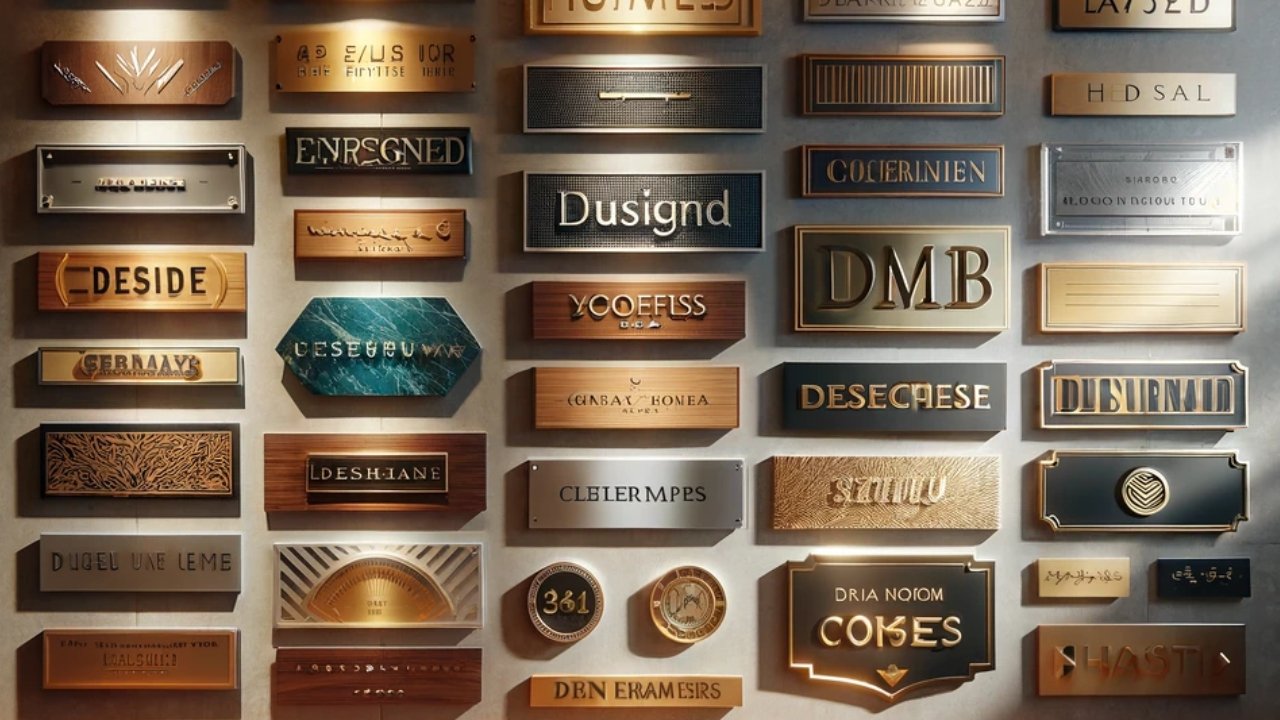
The best name plate material depends on where you will install it, the finish you prefer and the care it needs. Acrylic offers a wide choice of shapes and lettering; engineered wood gives a warm, engraved look; stainless steel provides a metallic finish. For an exposed entrance, check the suitability of the complete product, including its printing, fixings and any electrical components.
Start with the location, then choose the appearance. A sheltered apartment doorway and a gate facing direct rain place different demands on a nameplate. This guide helps you make a practical shortlist from the iCreations range.
First, separate material, lettering and lighting
A nameplate has several design choices. The base material may be acrylic, engineered wood or stainless steel. The lettering may be raised, engraved or UV printed. The finish may be matte, glossy, brushed or mirror-like. LED describes the lighting, rather than a separate material.
For example, an acrylic nameplate can have raised acrylic letters or a UV-printed design. Either approach can form part of an illuminated product. Keeping these choices separate makes comparisons much clearer.
For a closer look at lettering construction, read our raised acrylic letters vs UV-printed nameplates comparison.
Acrylic vs engineered wood vs stainless steel: a quick comparison
| Base material | Appearance and options | Consider it when | Check before ordering |
|---|---|---|---|
| Acrylic | Matte or glossy surfaces, cut shapes, raised letters or printed artwork | You want a particular colour combination or decorative layout | Thickness, lettering method, mounting and exposure suitability |
| Engineered wood | A warm wood-based appearance, including engraved designs | You prefer an engraved wooden style | Exact substrate, edge finish, care and suitability for the installation location |
| Stainless steel | Metallic surfaces with brushed or reflective finishes | You want a metal name board for a home or office | Steel grade, finish, lettering process and suitable fixings |
These are selection criteria, not a promise that every product in a material category performs identically. Coatings, construction and installation affect the finished nameplate.
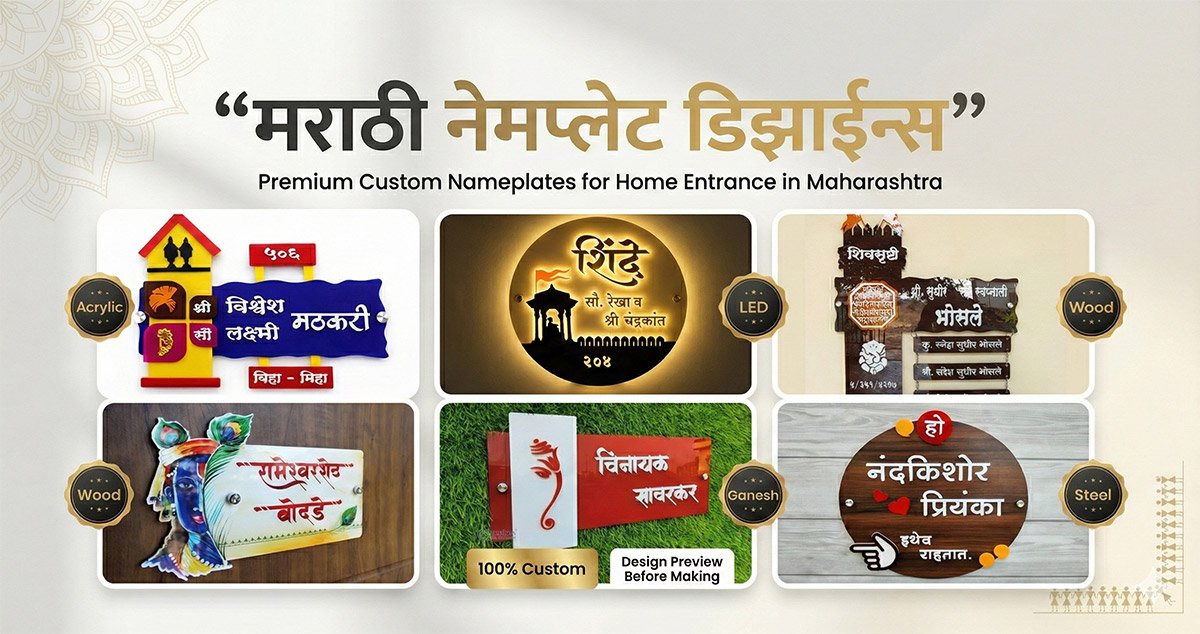
Acrylic nameplates: flexibility in shape, colour and lettering
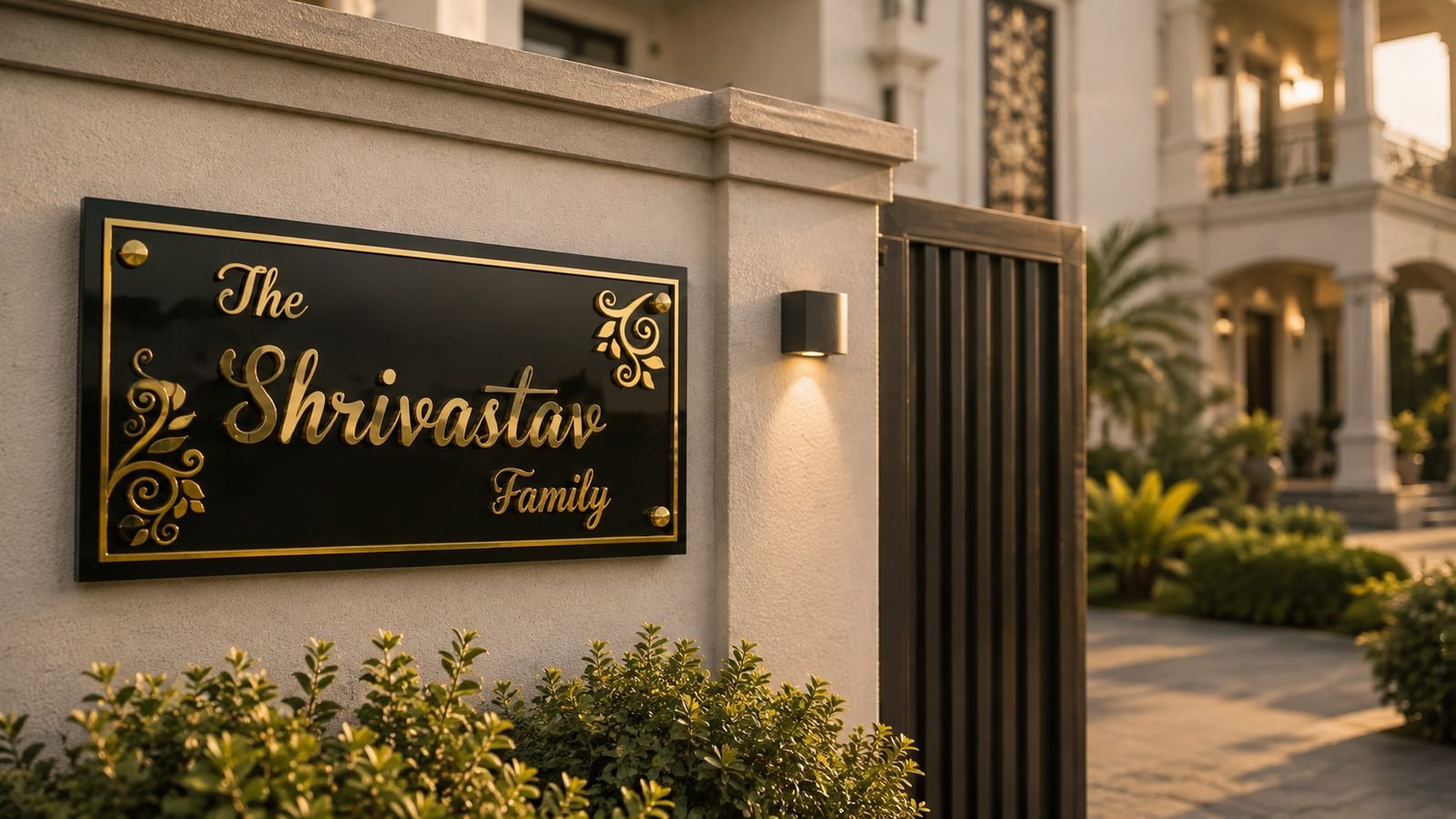
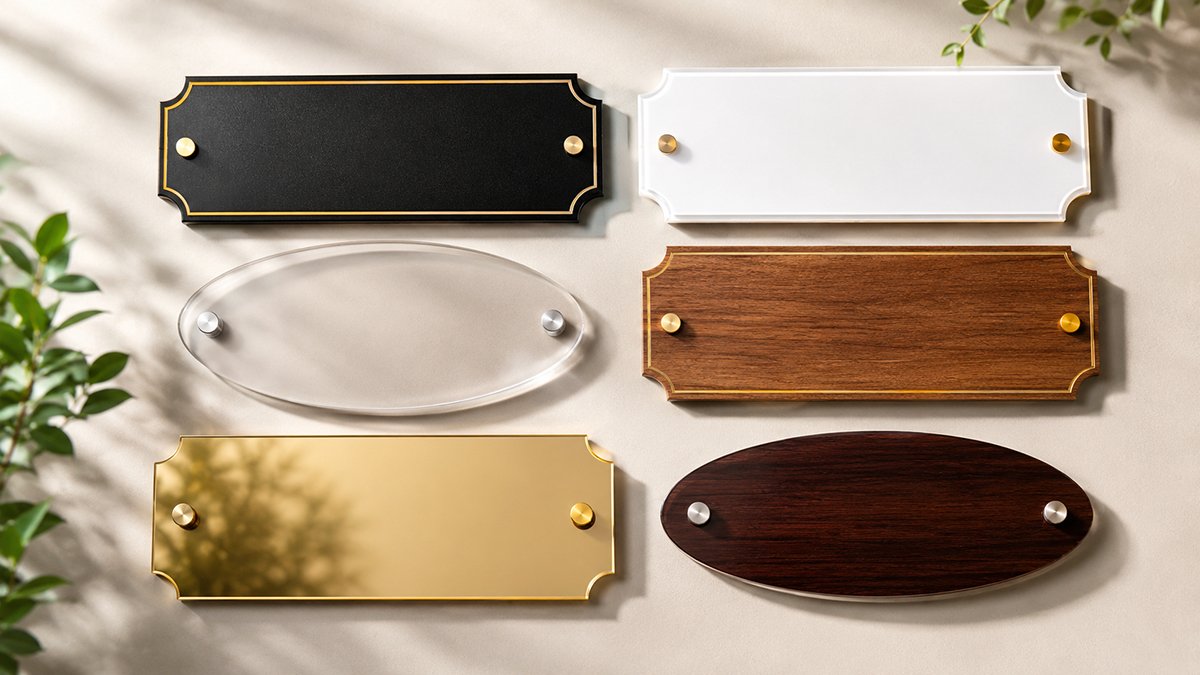
Acrylic is worth shortlisting when you want a distinctive silhouette, a dark or light background, or lettering that stands away from the base. A matte finish and a glossy finish can look quite different under the same entrance light. Choose the contrast and readability you prefer, then check the actual product specification.
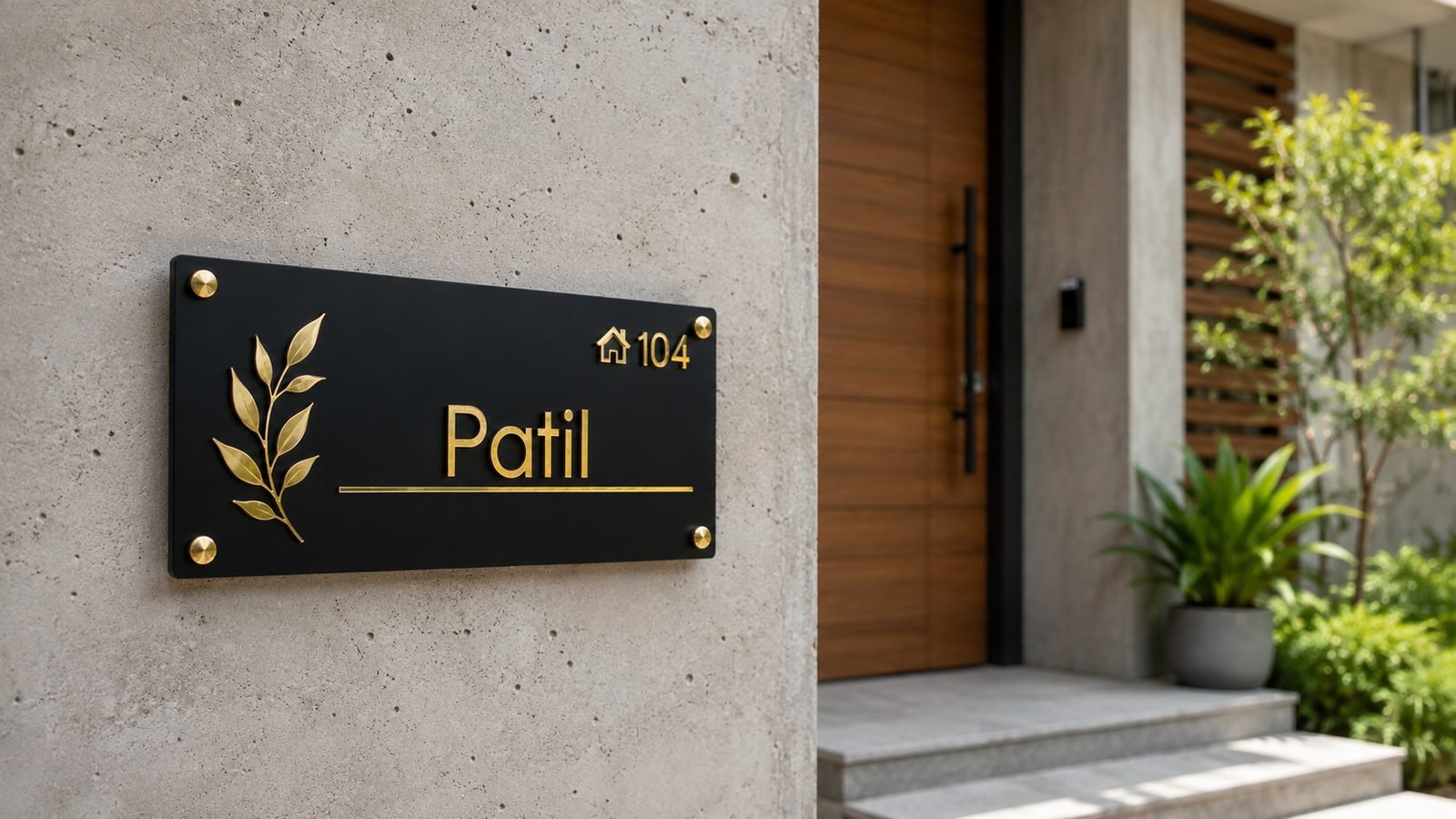
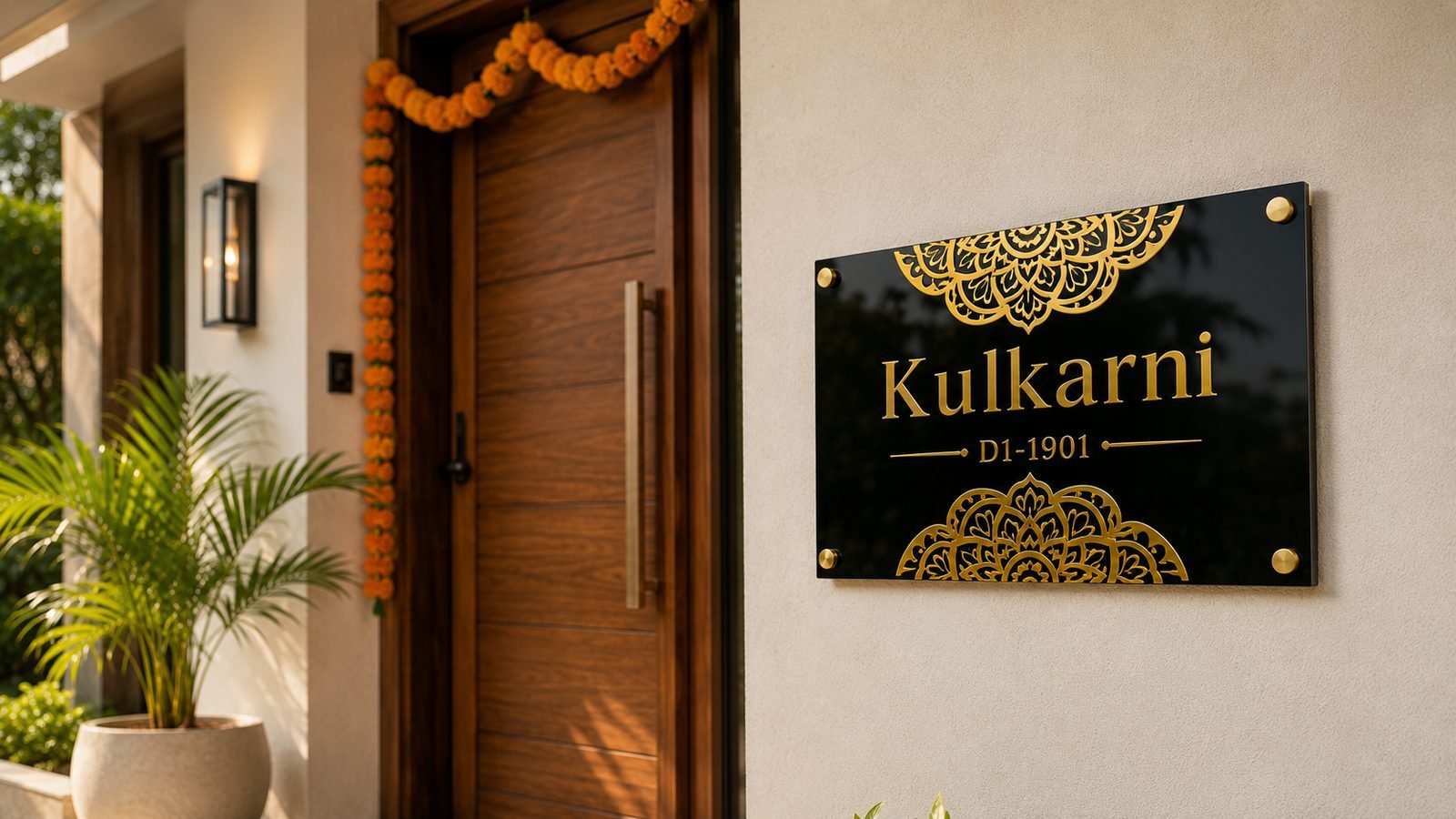
The 8×16 inch matte black acrylic name board is one option for a dark background with gold detailing. If you want separate raised letters, the acrylic house name board with golden embossed letters lists a 5 mm base and 3 mm letters, with multiple sizes.

Browse the acrylic nameplate collection for more designs. For outdoor locations, check the selected model’s suitability instead of assuming that every acrylic construction has the same protection.
Engineered wood: check what “wooden” means
A wooden appearance does not always mean solid timber. Engineered wood, plywood and a wood-pattern surface are different constructions. Read the material description, especially if you are choosing primarily for the grain or texture.
Our 6×12 inch engraved wooden house nameplate specifies an 18 mm engineered-wood base, with arch and oval shape options. It should be compared as engineered wood, rather than described as solid wood.
A wood-pattern design may suit you if appearance is your starting point, but confirm its substrate separately. Explore the wooden and wood-look range and ask about the exact construction, edge treatment and care for your chosen model. For a location regularly reached by rain, share a photograph of the installation area before ordering.
Stainless steel: choose the grade and finish, then the layout
Stainless steel suits a buyer looking for an actual metallic base. Brushed and mirror finishes reflect light differently, so consider the wall colour, nearby lamps and viewing angle. Give the lettering enough contrast; the most reflective finish is not automatically the easiest to read in every position.
The 8×16 inch silver house name board specifies 304-grade stainless steel and UV-printed customisation. This is a steel product; a silver-coloured acrylic product would be a different material even if its photograph looked similar.
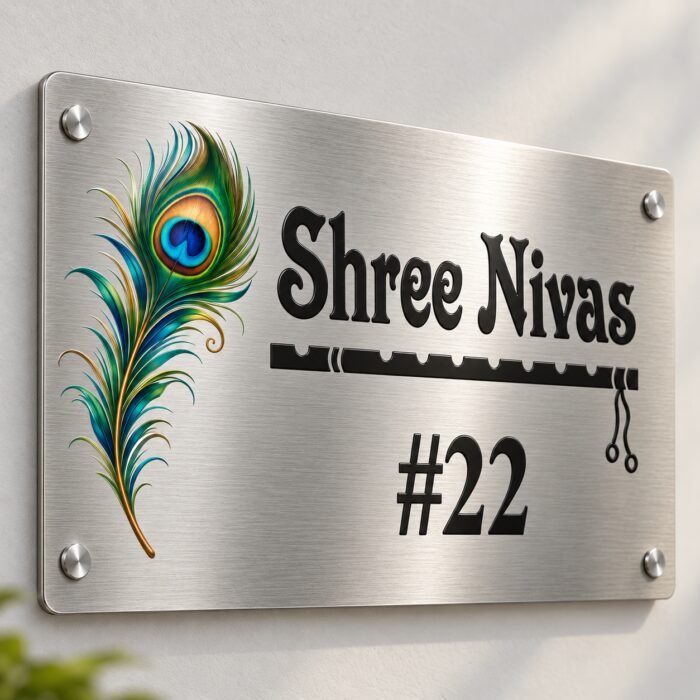
For a gate or exposed wall, discuss the environment and mounting surface with us. Steel grade alone does not describe the performance of the printing, fixings or every exposure condition. Explore the metal nameplate collection for the available formats.
Where do LED nameplates fit?
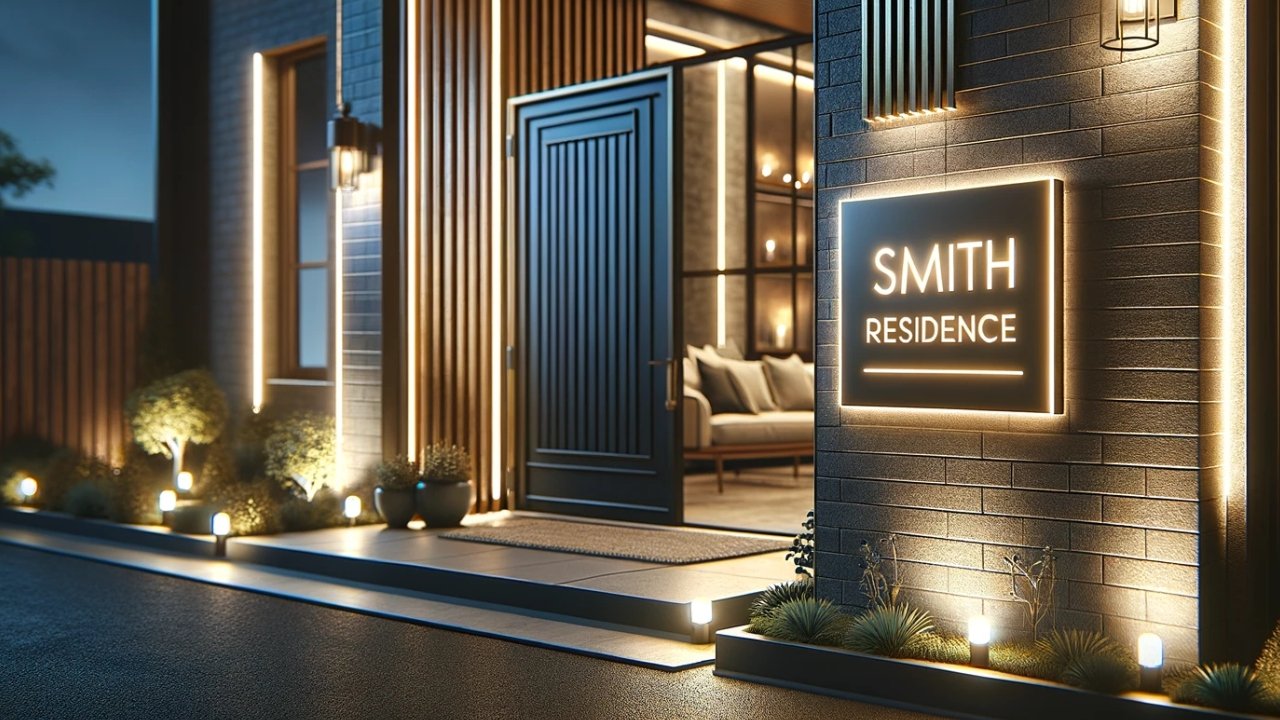
Choose illumination after choosing the base and design. An LED nameplate can be useful where the entrance looks dim at night, but it also needs an appropriate power connection and a practical cable route.
The round UV-printed acrylic LED nameplate combines a glossy 3 mm acrylic front with warm white lighting. It uses a wired two-pin plug connection. Its listing does not specify an IP rating, so keep the plug and socket protected from water and check the installation location before buying.
For more background, read our LED nameplate guide. Lighting does not replace suitable materials, clear lettering or correct mounting.
Which option suits your entrance?
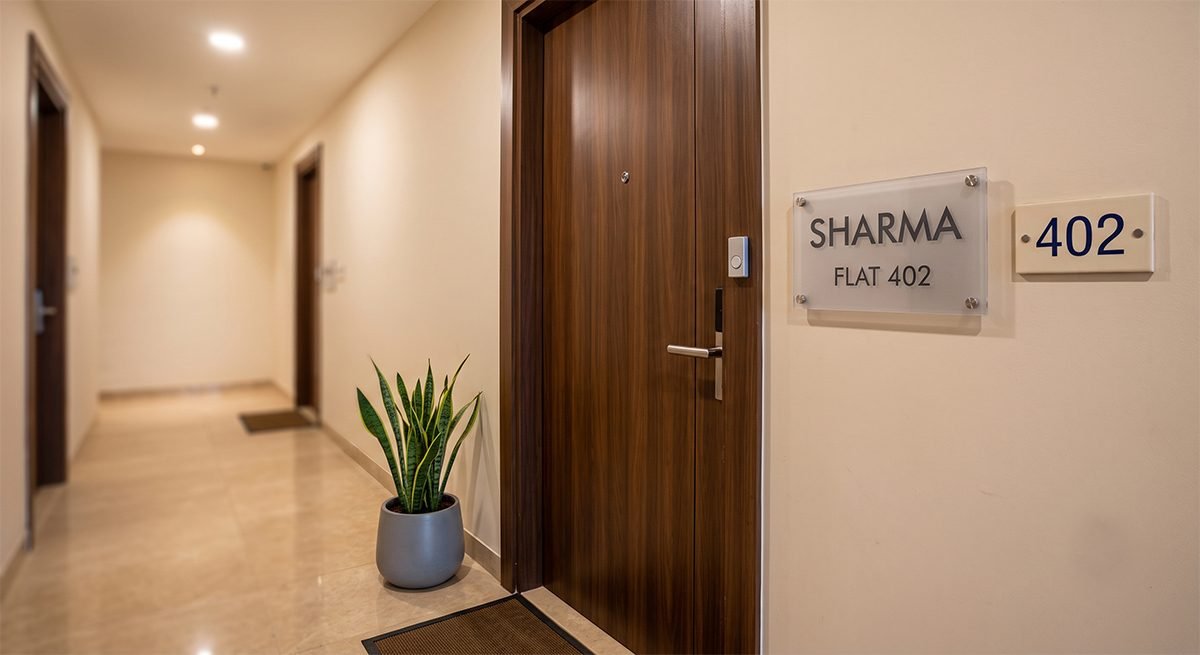
- Covered apartment doorway: shortlist by available space, readable lettering and the finish that works with your door. Acrylic and engraved wood-based designs offer different looks.
- Office entrance: start with clear name and designation hierarchy. A steel board may suit the surrounding hardware; acrylic offers other colour and layout choices.
- Gate or exposed wall: confirm suitability for sun, rain and the mounting surface for the exact product. Send us a location photograph if you are unsure.
- Dim entrance: compare an illuminated model with an unlit plate under the lighting already available. Check power access before choosing LED.
Measure the installation area before choosing a format. Our nameplate size guide explains the next step. If you need visual inspiration, explore our modern nameplate designs.
Compare the complete product, not just the price
A small engraved plate, a larger raised-letter board and an illuminated round plate are different products. Compare size, base thickness, lettering, supplied mounting parts and lighting before deciding which offers the right value. Use the current price for your selected variation on the product page; prices and options can change.
Our nameplate price guide explains cost factors. For detailed design ideas, see the acrylic design guide and laser-cut design guide.
Frequently asked questions
Is acrylic better than steel?
Neither is the best choice for every entrance. Acrylic offers varied colours and shapes; steel provides a metallic base. Choose the exact product based on appearance, readability, installation and exposure.
Is a wooden nameplate always solid wood?
No. Check whether the specification says solid wood, engineered wood, plywood or a wood-pattern surface. Those terms describe different products.
Is LED a nameplate material?
No. LED describes illumination. The front and body still have their own materials, such as acrylic.
Can I approve the design before it is made?
The linked iCreations examples offer a personalised design-preview process. Our team contacts you after ordering and shares the preview for approval. Check spelling, house number, language and layout carefully; confirm any special requirements with us.
Build your shortlist
Choose two or three designs you like, measure the space, and tell us whether the location is sheltered or exposed. Contact iCreations with your requirements so we can help you choose a suitable model and prepare your personalised layout.




3 thoughts on “Name Plate Material Guide: Acrylic, Engineered Wood or Steel?”
Comments are closed.