Raised Acrylic Letters vs UV-Printed Nameplates: Which Should You Choose?

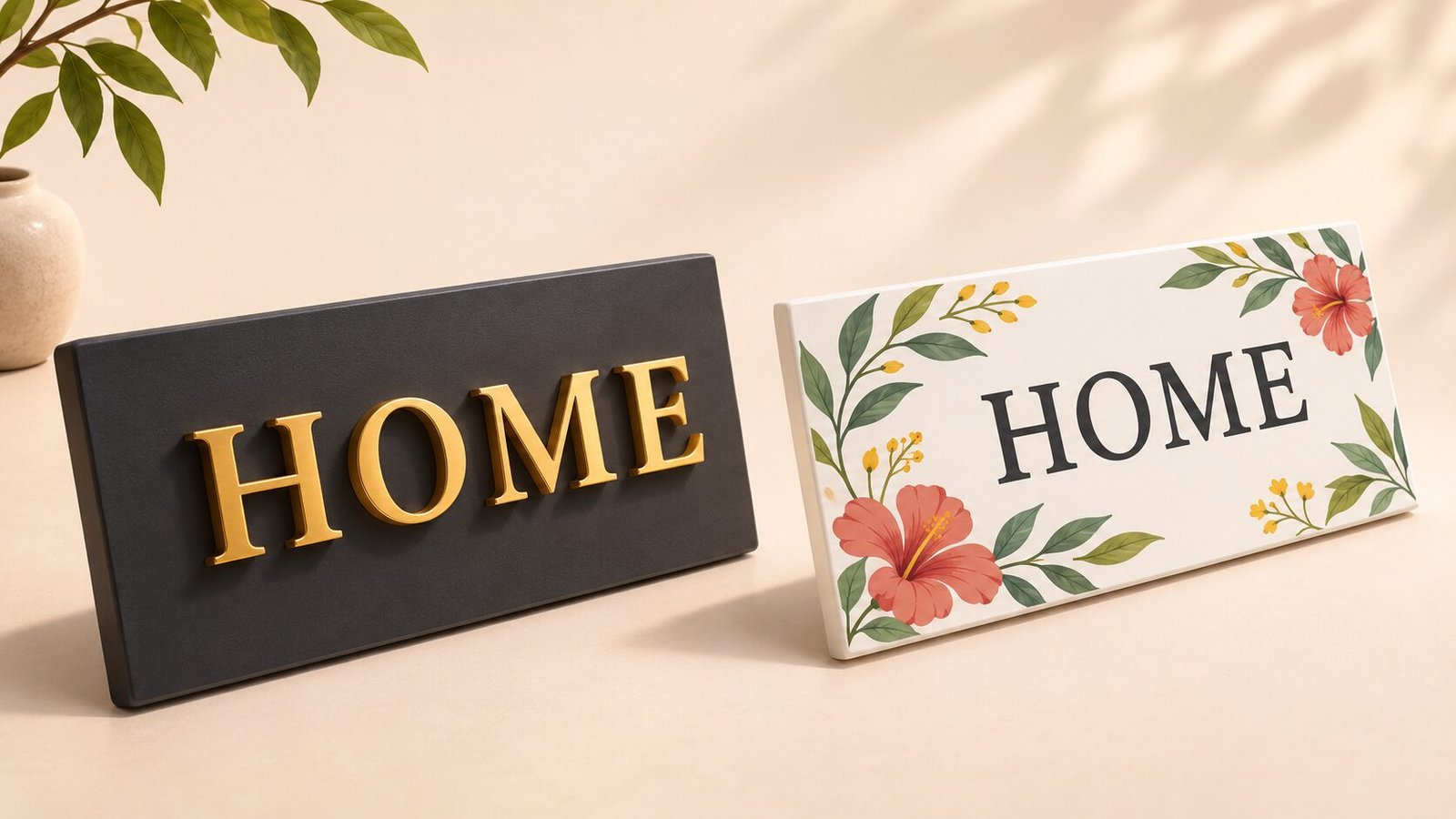
Choose raised acrylic letters if you want visible depth and shadows around the name. Choose a UV-printed nameplate if you prefer artwork and lettering applied as a printed design. Both can make an attractive entrance sign; the right choice depends on the layout, base material, lighting and installation location.
Two nameplates can look similar in a small photograph while being built quite differently. A gold-coloured name may be a separate acrylic letter, part of a printed design or a different finish altogether. Here is how to tell the difference and choose an iCreations product that suits your entrance.
The featured image is an AI-generated conceptual illustration of raised and printed lettering, not a photograph of products offered for sale. Product examples below link to their own listings.
What are raised acrylic letters?
Raised-letter nameplates use separate letter shapes positioned on a base. The letters stand proud of the background, creating a layered appearance. You may also see this style described as embossed, elevated or 3D acrylic lettering. Read the construction details rather than relying on the label alone.
The effect is most noticeable from an angle or when light casts a shadow beside each letter. A simple surname, house name or number can become the main visual feature without needing a busy background.

Consider our acrylic house name board with golden embossed letters if the layered lettering is the feature you want. It offers 8×16, 10×20 and 12×24 inch formats. Check your available wall space and text length before selecting the size.
What is a UV-printed nameplate?
UV printing applies ink to a surface and cures it using ultraviolet light. The name, number and decorative elements form a printed design rather than separate cut-out acrylic letters. Printing is not the same process as engraving, which removes or marks material.
UV printing can reproduce coloured artwork and fine design elements alongside the name. The result depends on the artwork, contrast, print process and base. A printed surface can have some ink texture; that is different from the substantial depth of separate acrylic letters.
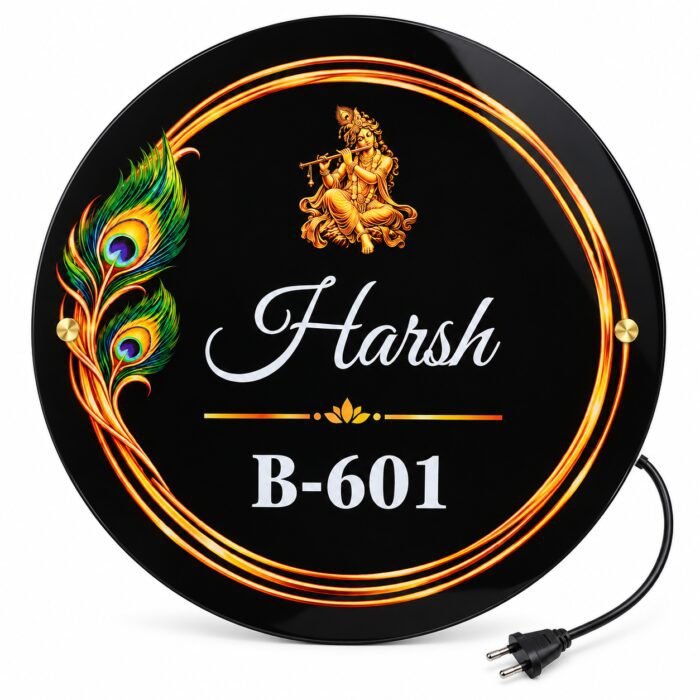
Printing can be on the front or reverse of a suitable panel. On our round acrylic LED model, the design is reverse printed: it is viewed through the glossy acrylic front.
Raised letters vs UV printing: compare the differences
| Decision | Raised acrylic letters | UV-printed design |
|---|---|---|
| Visual effect | Separate letter shapes add depth and shadows | Printed text and artwork create a graphic surface design |
| Design emphasis | A name or number can be the main sculptural feature | Useful when coloured motifs and detailed artwork matter |
| Viewing angle | Letter depth becomes clearer from the side | Appearance depends mainly on print contrast and the base finish |
| Cleaning | Take care around letter edges and attachments | Follow the care instructions for the printed surface or reverse-printed panel |
| Lighting | Raised lettering alone does not mean the plate is illuminated | UV printing alone does not mean the plate is illuminated |
| Price | Depends on size, material, layout and construction | Depends on size, base, artwork and any lighting assembly |
Choose raised letters when the name should be the feature
A restrained layout with a clearly spaced family name or house number is a good starting point. Give the letters room around the edges and keep decorative elements from competing with the text. If several long names must fit, increasing the board size may work better than shrinking every letter.
Check a front view and an angled view. A reflective letter finish can look different under daylight and corridor lamps, so ask about the finish if a photograph leaves you unsure. For more shape and motif ideas, explore our laser-cut nameplate design guide.
Choose UV printing when the artwork is part of the identity
A printed design is worth considering when you want colourful motifs, a detailed illustration or a coordinated composition around the name. Keep enough plain space behind the lettering so the artwork supports readability.
The round UV-printed acrylic LED nameplate suits a buyer who wants a round format with printed artwork and warm white lighting. Its listing specifies a glossy 3 mm acrylic front and 12, 15 or 18 inch diameter options. It uses a wired two-pin plug, so plan a suitable socket and cable route.
If you prefer a metal base, look at the 8×16 inch silver stainless steel house name board, which specifies 304-grade steel and UV printing. This shows why the lettering process and base material should be considered separately.
Compare equivalent specifications before comparing price
The raised-letter rectangular board, round LED plate and printed steel board above are examples of different constructions. They are not a controlled comparison of the lettering methods: their sizes, shapes, materials and lighting also differ.
When comparing prices, list the dimensions, base, lettering, finish, lighting and supplied mounting parts for each shortlisted product. Use the current price of the selected variation on its product page. Neither printing nor raised lettering is automatically the cheaper choice in every format. Our nameplate price guide explains the broader cost factors.
What about outdoor use and maintenance?
The lettering method alone does not determine outdoor suitability. The base, finish, printed layer or letter attachments, fixings and installation conditions all matter. For an exposed gate or wall, describe the sun and rain exposure when discussing your chosen product with us.
For an illuminated plate, the electrical connection needs attention too. The round LED model’s listing specifies a weatherproof body but no IP rating; protect its plug and socket from water. Follow the care instructions for your exact model, use a soft cloth and avoid pulling at raised letters or scrubbing a printed design.
Five checks before approving your design
- Confirm the construction: separate raised letters, front printing or reverse printing?
- Check the base: acrylic, engineered wood and stainless steel are different materials, even when colours look similar.
- Read the name at a realistic size: prioritise spelling, spacing and contrast over extra decoration.
- Measure the installation area: include space for mounting and, where relevant, an LED rear box and cable.
- Approve the final proof: check every name, language character and house number before production.
The linked iCreations products offer a design-preview process. We contact you after ordering to discuss customisation and share the design for approval. A digital preview helps check the layout; it cannot reproduce every reflection, material texture or lighting condition on a screen.
Frequently asked questions
Are UV-printed letters raised?
A UV-printed design uses cured ink rather than separate cut-out acrylic letters. Some ink texture is possible, but it is not the same construction as a raised acrylic letter.
Can a printed nameplate have LED lighting?
Yes. Our round UV-printed acrylic model combines a printed front with an LED box behind it. Check the power and mounting requirements of the specific model.
Which method lasts longer?
There is no reliable universal answer based only on the lettering method. Compare the complete product, care instructions and suitability for the location rather than assuming either method always lasts longer.
Which should I choose for my home?
Start with raised letters if visible depth is your priority. Start with UV printing if coloured artwork is central to the design. Then compare the base, size, finish and lighting against your entrance.
Find the right combination for your entrance
Use our nameplate material guide to choose the base and our size guide to check the space. Browse the acrylic nameplate collection, or contact iCreations with your preferred design and a photograph of the location for help choosing a suitable model.