
Name Plate Size Guide: What Size Should Your Name Plate Be? (2026)

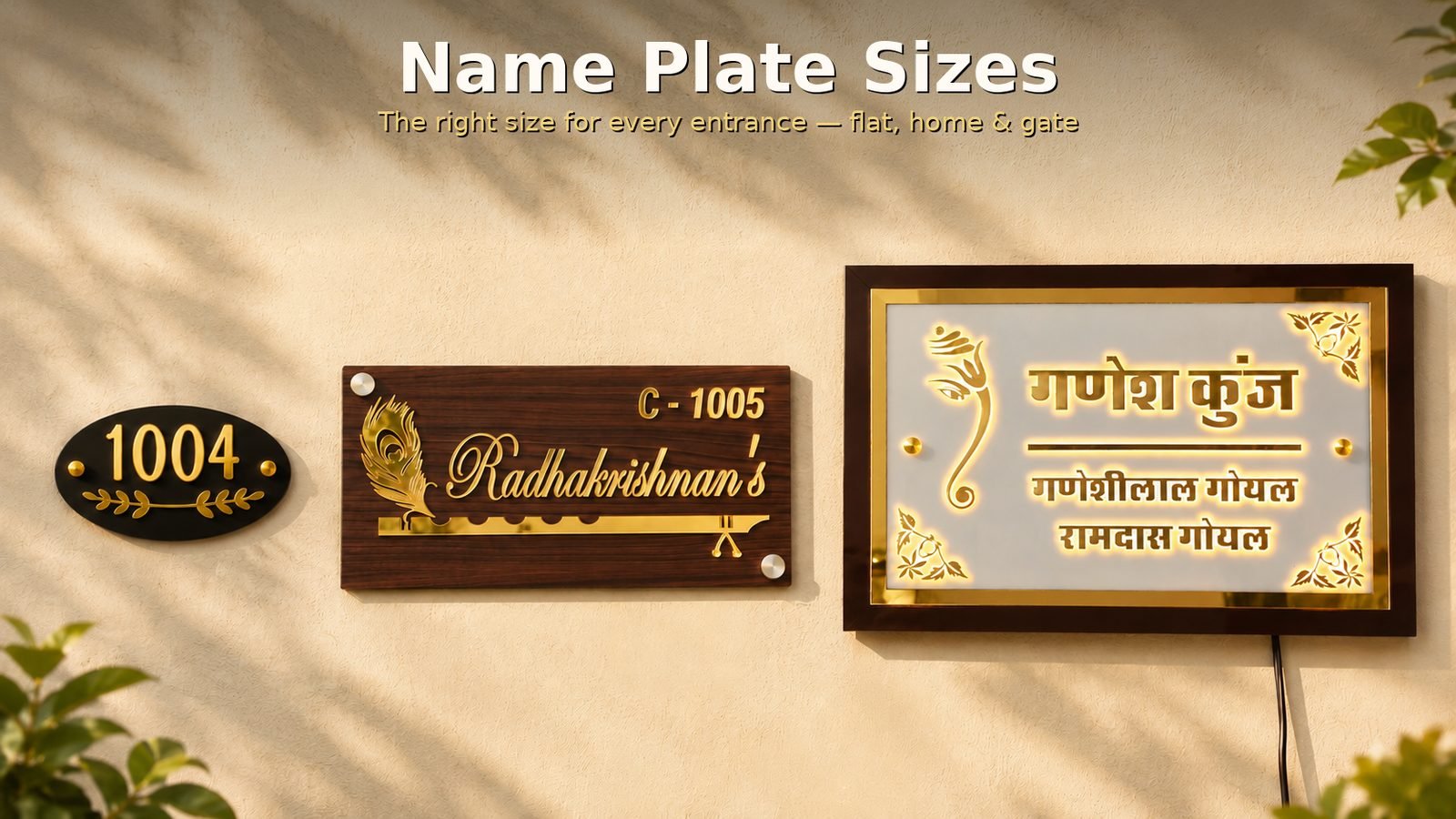
Choosing the design is the fun part — but getting the name plate size right is what makes it actually work. Too small on a big gate and it looks lost; too large on a compact flat door and it overwhelms the space. The right size is readable from the correct distance, proportionate to the wall or door, and looks intentional rather than accidental.
This name plate size guide gives you the standard sizes for every part of an Indian home — flat doors, main entrances, gates, boundary walls, and offices — in both inches and feet, plus letter-height rules for visibility, how to measure, and the common sizing mistakes to avoid. Get the size right and you will never have to reorder.
On this page
- 1. Standard Name Plate Sizes at a Glance
- 2. Name Plate Size by Location
- 3. Letter Height and Visibility Guide
- 4. How to Measure and Choose the Right Size
- 5. One Name or Two? Portrait vs Landscape
- 6. Common Name Plate Size Mistakes to Avoid
- 7. iCreations Sizes & Ordering a Custom Size
- 8. Frequently Asked Questions
- Ready to Order the Right Size?
1. Standard Name Plate Sizes at a Glance
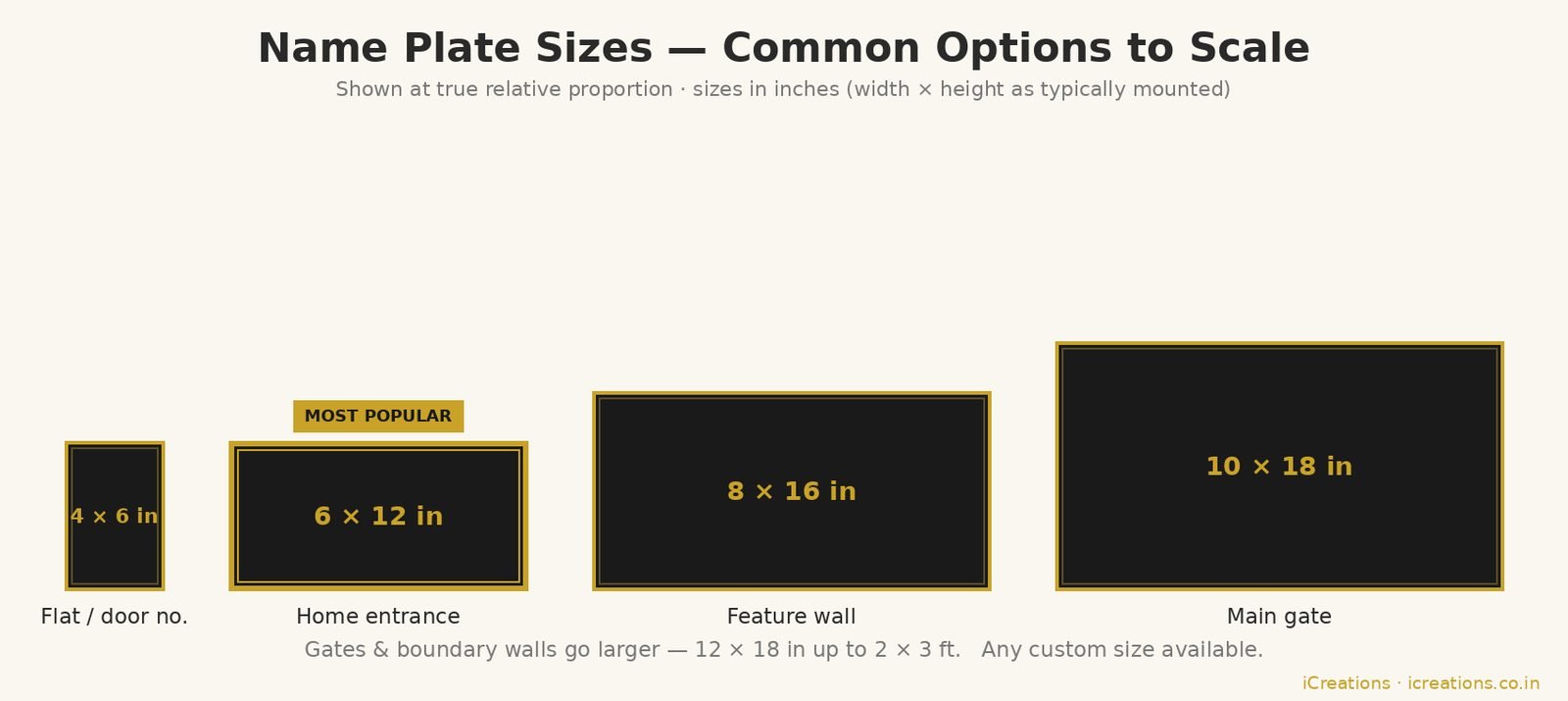
Every space has a size that simply looks right. Here is the quick reference for the most common name plate size choices in India:
| Location | Recommended size | Orientation |
|---|---|---|
| Apartment / flat door | 4 x 6 in – 6 x 8 in | Portrait or square |
| Standard home entrance | 6 x 12 in | Landscape |
| Large home / feature wall | 8 x 16 in | Landscape |
| Main gate (independent house) | 10 x 18 in – 12 x 18 in | Landscape |
| Boundary wall (bungalow/villa) | 15 x 24 in – 2 x 3 ft | Landscape |
| Office cabin door | 4 x 12 in | Landscape |
| Office / reception desk | 2.5 x 10 in | Landscape |
These are starting points, not hard rules — the right size always depends on the wall, the viewing distance, and how much text the plate carries. The sections below explain how to fine-tune for each.
2. Name Plate Size by Location
Where the plate goes matters more than anything, because it sets both the viewing distance and the proportion.
Apartment & flat doors
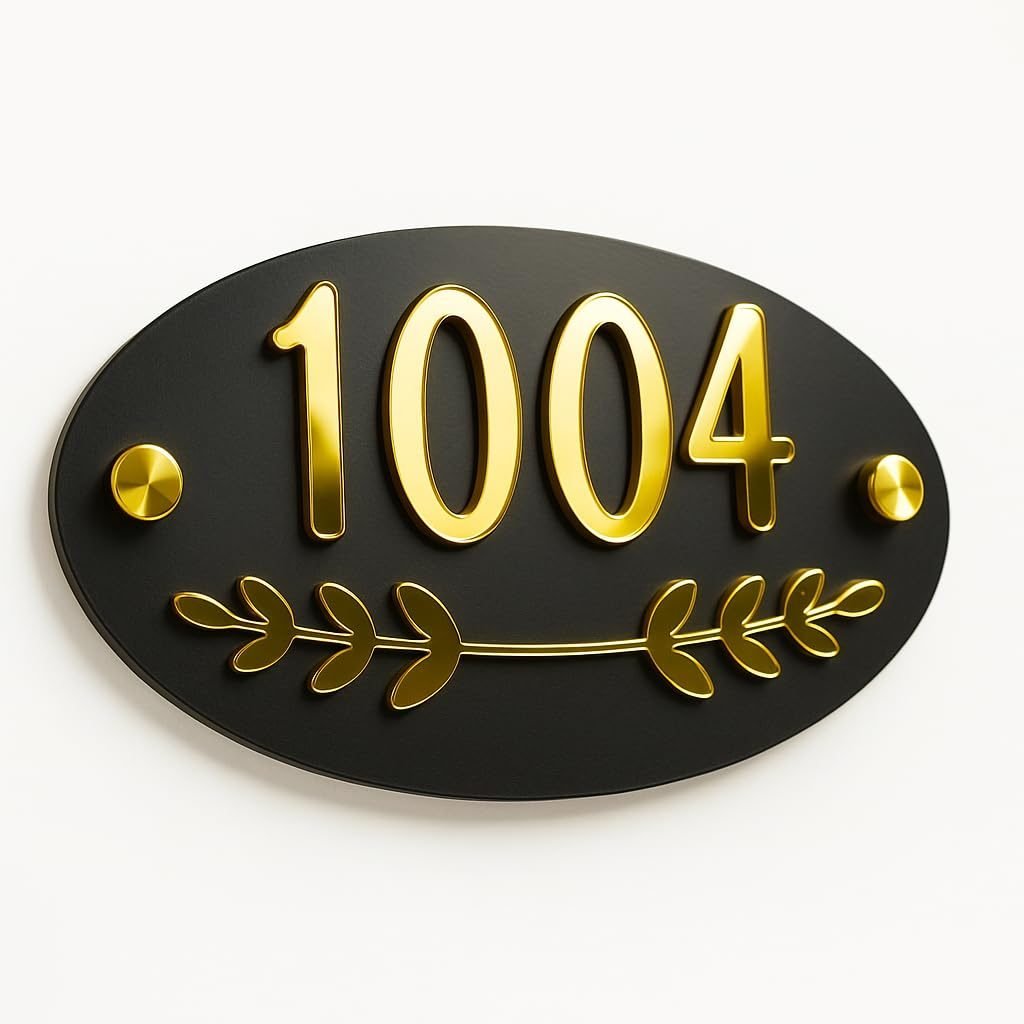
Apartment corridors are tight and viewed from close up (about 3 feet), so a compact plate is perfect. A 4 x 6 inch number-and-name plate or a 6 x 8 inch plate keeps things clean without crowding the door. Because society doors are usually a standard width, a compact plate mounted at eye level beside or on the door looks tidy and proportionate — a large plate here tends to look bulky and can crowd the peephole, bell, or security fittings. Our door number plate for flats (4×6 inch) at ₹199 is sized exactly for this. For more compact ideas, see our name plate designs for flats guide.
Standard home entrances
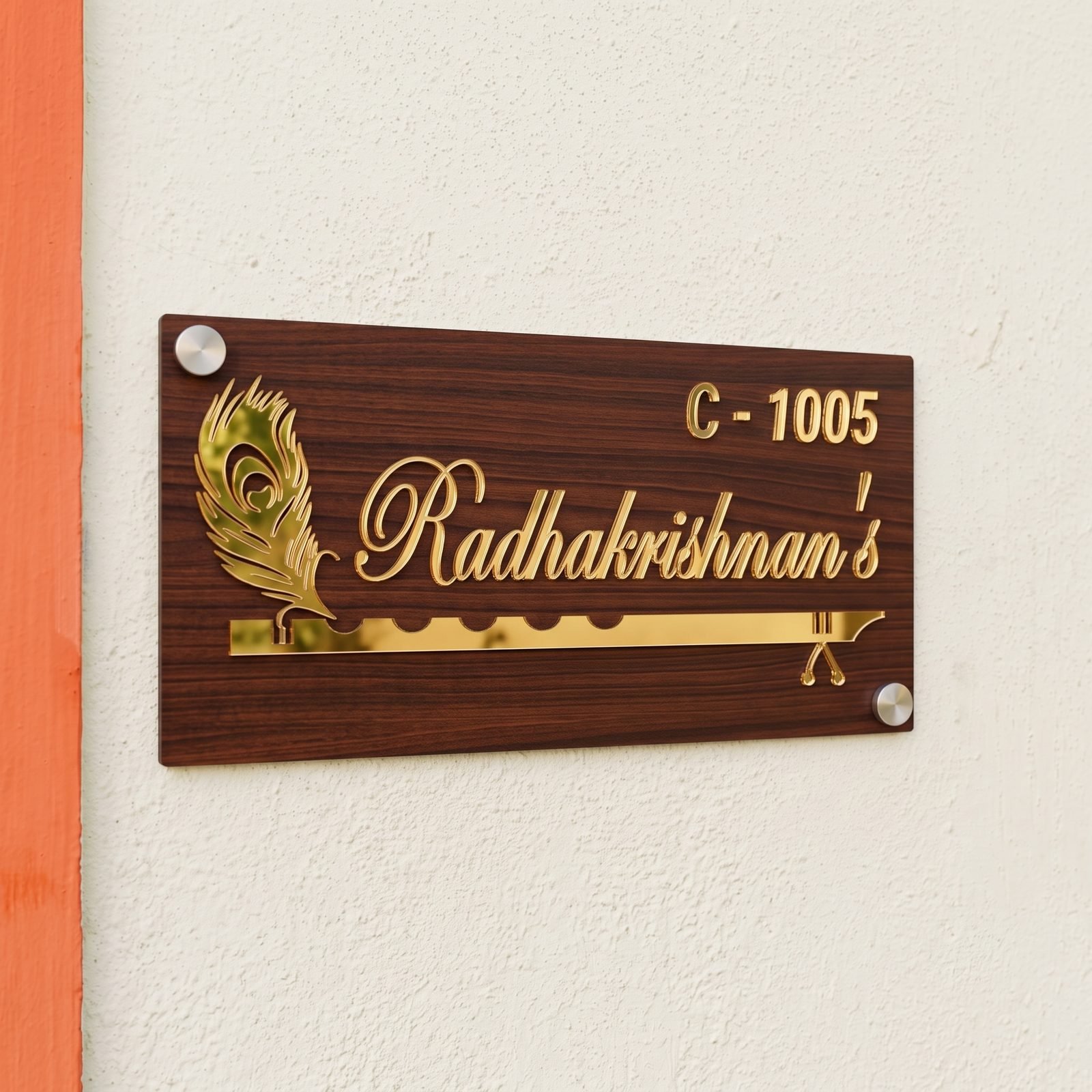
For a typical main door or the wall beside it, 6 x 12 inches is the sweet spot — large enough to read comfortably from the gate, small enough to stay elegant. This is the most-ordered home size and suits a family name with an optional small motif. If you want to add a house name or a small deity motif alongside the surname, this size still holds it comfortably; add a second full line of text and you may want to step up slightly so nothing feels tight.
Large homes & feature walls
If your entrance wall is generous, step up to 8 x 16 inches for presence. This size carries a family name plus a house name or number without feeling cramped — like our 8×16 inch house name board at ₹1,099.
Main gates & boundary walls
For an independent house, villa, or bungalow, the plate has to read from the road, so it needs scale. A main gate plate works best at 10 x 18 to 12 x 18 inches, while a boundary wall plate suits 15 x 24 inches up to 2 x 3 feet. Under-sizing a gate plate is the single most common mistake. A useful check: a gate plate should be large enough that the house name is comfortably readable from where a car would slow down to enter, not just from the gate itself. If the wall is tall or wide, err toward the larger end of the range so the plate holds its own against the architecture rather than looking like a small sticker. Our main gate name plate designs guide covers these larger formats in detail.

Office cabins & desks
For a cabin door, a slim 4 x 12 inch plate is standard; for a reception or desk nameplate, around 2.5 x 10 inches works well. Clean, horizontal, and professional. If the plate needs to carry a name plus a designation (for example, a manager’s name and title), give it a little extra width or a second line so both read clearly — a cramped office plate undercuts the professional impression it is meant to create. Desk nameplates are usually kept low and wide so they sit neatly in front of a monitor without blocking the line of sight.
3. Letter Height and Visibility Guide
A nameplate is only the right size if the lettering is readable from where people stand. As a simple rule, letters should be about 1 inch tall for every 10 feet of viewing distance — and a little bolder outdoors.
| Viewing distance | Minimum letter height |
|---|---|
| Apartment corridor (~3 ft) | 0.75 – 1 in |
| Main door / entrance (~10 ft) | 1 – 1.5 in |
| Gate from the road (~15–20 ft) | 3 – 4 in |
| Large boundary wall / villa | 4 in and up |
For gate and boundary-wall plates especially, the house name or number should be the largest element (3–4 inches), with secondary text like the family name a little smaller. This hierarchy is what keeps a large plate readable at speed from a moving vehicle.
Two other factors affect readability as much as height. Contrast matters — light letters on a dark base (gold or white on matte black) read far better from a distance than low-contrast combinations. And weight and spacing count: a slightly bolder font with generous spacing stays legible outdoors, where a thin, tightly-packed font blurs at a distance. When in doubt for an outdoor plate, go a touch bolder and a touch larger than feels necessary indoors.
India even has a formal reference for signage dimensions — the Bureau of Indian Standards’ IS 11154 nameplate standard — though for homes, the practical rules above are what matter most.
4. How to Measure and Choose the Right Size
Getting your size right takes two minutes:
- Measure the space. Measure the wall area or door panel where the plate will sit (width and height). Leave clear margin around it — the plate should occupy roughly the middle two-thirds, not edge to edge.
- Note the viewing distance. Where will people usually read it from — a corridor, the doorstep, or the road? That sets the letter height (see the chart above).
- Count your text. A single family name needs less width than a name plus a house name, number, or a second line. More text means a larger or wider plate.
- Pick orientation. A wide wall suits landscape; a tall, narrow spot suits portrait or a square.
- Size up if unsure. A plate that is slightly larger reads as intentional; one that is slightly too small looks like an afterthought. When in doubt, go one size up.
A quick trick: cut a piece of paper or cardboard to the size you are considering and tape it to the wall or door for a day. Step back to your usual viewing spot and check whether it looks proportionate and readable. This “mock-up” takes five minutes and removes almost all the guesswork — it is the easiest way to feel confident before you order.
If you are still unsure, send us a photo of your entrance with rough measurements and we will recommend the ideal size — it is the surest way to get it right the first time.
5. One Name or Two? Portrait vs Landscape
Two quick decisions shape your final size.
How many lines of text? A single surname fits a compact or square plate. A family name plus “Niwas,” a house name, or a door number needs more room — usually a wider landscape plate or a slightly taller one, so nothing feels crammed.
Portrait, landscape, or square? Landscape (wider than tall) is the most popular and suits most entrances and gates. Portrait or square plates work beautifully for compact flat doors, monogram designs, and modern minimalist looks — see our modern name plate designs guide for clean contemporary shapes. Match the plate’s orientation to the shape of the space it will fill.
6. Common Name Plate Size Mistakes to Avoid
A few sizing errors show up again and again — avoid these and your plate will look professionally proportioned:
- Under-sizing the gate plate. The most frequent mistake. A 6 x 12 plate that looks fine on a door disappears on a large gate. Scale up for boundary walls.
- Letters too small to read. A big plate with tiny text still fails. Match letter height to viewing distance.
- Cramming text edge to edge. Fitting a long name across the full width kills the premium look. Choose a larger plate and keep breathing space.
- Ignoring the wall proportion. A landscape plate on a tall narrow pillar (or vice versa) looks off. Match orientation to the space.
- Forgetting the second line. Ordering a size for one name, then adding a house number, leaves it cramped. Plan for all your text upfront.
Choosing the right material matters just as much as size — our name plate material guide helps you pair the right size with the right material.
7. iCreations Sizes & Ordering a Custom Size
iCreations makes nameplates across every size in this guide — from a compact 4 x 6 inch flat plate to a grand 2 x 3 foot boundary-wall board — and because every plate is laser cut in-house to order, you are never limited to fixed sizes. If your space needs a size between the standards, we simply cut it to your measurement.
Popular ready sizes: 4 x 6 in and 6 x 8 in for flats, 6 x 12 in for home entrances, 8 x 16 in for feature walls, and larger formats for gates and villas. Browse the full acrylic name plate collection to see sizes and designs together. Placing a new plate at a new home? Our Vastu for name plate guide covers the right direction and placement too.
Does a bigger name plate cost more?
Yes — nameplates are priced largely by area, so a larger size uses more material and machine time and costs more than a compact plate. A 4 x 6 inch flat plate is the most affordable, a 6 x 12 inch home plate sits in the mid-range, and large gate or boundary-wall boards cost the most. Adding LED backlighting or premium raised-metal letters also raises the price at any size. The good news is that in-house manufacturing keeps every size keenly priced — for a full breakdown by size, material, and type, read our name plate price in India guide. Choosing the smallest size that still reads well from your viewing distance is the simplest way to get the look you want at the best price.
8. Frequently Asked Questions
What is the standard name plate size for an Indian home?
For a standard main entrance, 6 x 12 inches is the most popular size. Flats suit 4 x 6 to 6 x 8 inches, large homes 8 x 16 inches, and gates or boundary walls 12 x 18 inches up to 2 x 3 feet.
What size name plate is best for an apartment or flat?
A compact 4 x 6 inch or 6 x 8 inch plate is ideal for apartment doors, since corridors are viewed from close up and space is limited.
What size should a main gate name plate be?
For an independent house gate, 10 x 18 to 12 x 18 inches works well; for a boundary wall, go 15 x 24 inches up to 2 x 3 feet so it reads clearly from the road.
How big should the letters on a name plate be?
About 1 inch of letter height for every 10 feet of viewing distance. For a gate read from 15–20 feet, letters should be 3–4 inches tall; for a door, 1–1.5 inches is enough.
Should a name plate be portrait or landscape?
Landscape (wider than tall) suits most entrances and gates. Portrait or square plates work well for compact flat doors, monograms, and modern minimalist designs. Match the orientation to the space.
Can I get a custom size name plate?
Yes. Because iCreations laser cuts every plate in-house, you can order any custom size to fit your exact wall or door — not just the standard dimensions.
What size name plate do I need for two names or a name and number?
Add width or height so nothing is cramped — a 6 x 12 inch or larger landscape plate comfortably holds a family name plus a house name or door number.
How much clearance should a name plate have around it?
Aim to have the plate occupy about the middle two-thirds of the available wall or door panel, leaving clear margin on all sides so the design can breathe.
Is a bigger name plate always better?
No. The right size is the one that reads clearly from your viewing distance and stays proportionate to the space. An oversized plate on a small door looks as awkward as an undersized one on a big gate — match the size to the location.
What is the most popular name plate size in India?
For home entrances, 6 x 12 inches is the most commonly ordered size, as it balances readability and elegance for most doors and entrance walls.
Does name plate size change by material?
The size guidance is the same across materials, but very large formats are easier and lighter in acrylic, while heavy metal plates are usually kept to moderate sizes. Acrylic handles everything from a 4 x 6 inch flat plate to a 2 x 3 foot board comfortably.
How do I know what size to order online?
Measure your wall or door space, note how far away people will read it from, and match those to the tables above — or simply send us a photo with rough measurements and we will recommend the exact size.
Ready to Order the Right Size?
With the right name plate size, your entrance looks intentional, reads clearly, and never needs a reorder. Use the tables above to match the size to your location and viewing distance, size up if you are unsure, and mock it up with paper first — those three habits alone will get you the perfect fit. Browse iCreations’ fully customisable nameplates in every standard size — or send us your measurements for a custom fit — each laser cut in-house and delivered across India.
👉 Explore name plate sizes and designs