Vastu for Name Plate: Right Direction, Colour & Placement (2026 Guide)

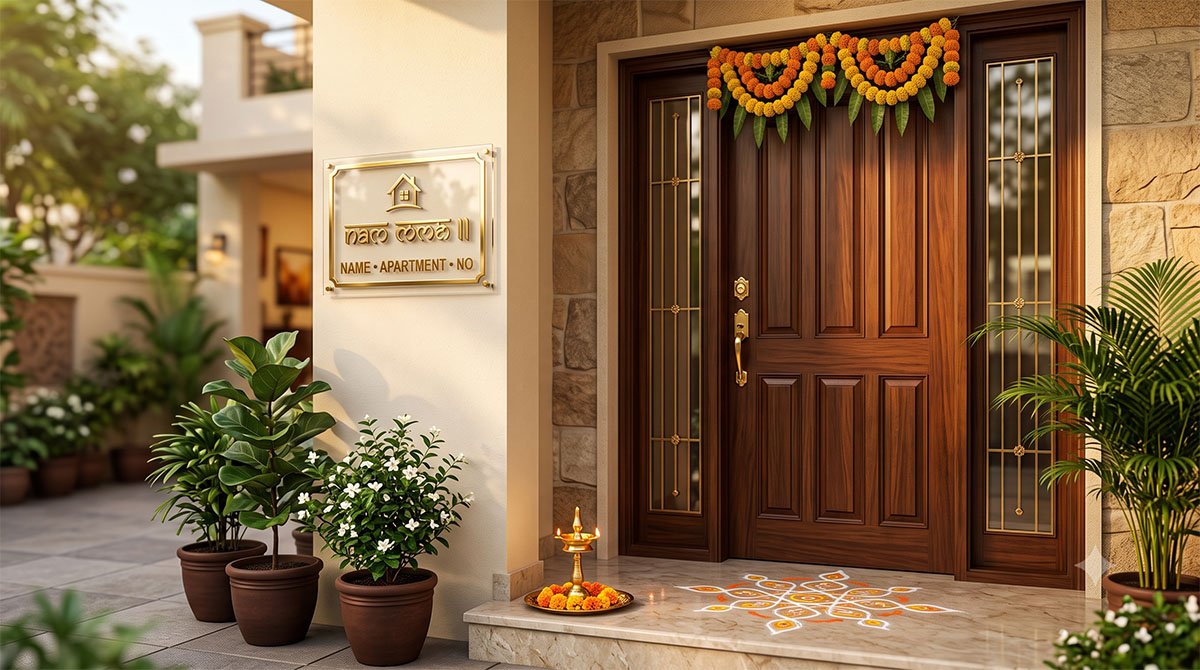
Every Indian home has a threshold — that single step between the noise of the street and the calm of your own space. In Vastu Shastra, this threshold is treated as sacred, and the name plate that sits on it is far more than a label. It is the first thing a guest reads, the first impression your home projects, and, as tradition holds, a quiet invitation for prosperity to walk through your door. That is exactly why vastu for name plate is one of the most common questions we hear at iCreations — usually from families settling into a new home or planning their griha pravesh.
Over years of designing and hand-finishing nameplates for homes across India — apartment doors in Pune, row houses in Nagpur, villas on the outskirts of Hyderabad — we’ve seen that a handful of simple Vastu principles genuinely change how a nameplate looks and feels at the entrance. This guide puts those principles in plain language: where to place your name plate, the ideal direction and height, the colours and materials suited to each facing, the symbols considered auspicious, and honest workarounds for flats where you simply can’t change the door’s direction.
A quick, respectful note before we begin: Vastu Shastra is a traditional system of belief and design, not a rulebook everyone must follow. Treat what follows as widely-practised guidance on vastu for name plate placement. For a serious dosha or a newly-built home, a qualified Vastu consultant is always the right call.
In this guide:
- Why Your Name Plate Matters in Vastu
- Where to Place a Name Plate as per Vastu (Position & Height)
- The Best Direction for a Name Plate as per Vastu
- Name Plate Colour as per Vastu (Direction-Wise Chart)
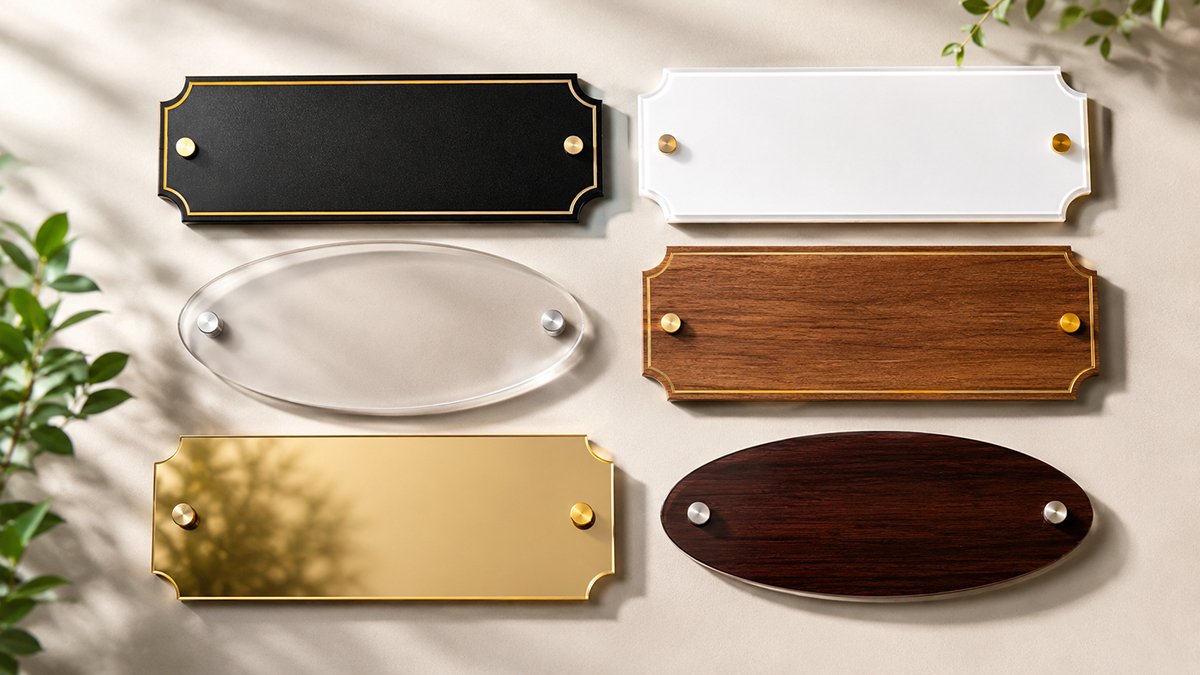
- The Best Material for a Vastu Name Plate
- Auspicious Symbols and Elements
- Name Plate Vastu for Flats and Apartments
- Quick Vastu Do’s and Don’ts
- How iCreations Helps You Get It Right
- Frequently Asked Questions
- Vastu for Name Plate: Key Takeaways
Why Your Name Plate Matters in Vastu
In Vastu Shastra, the main door — the mukhya dwar — is considered the mouth of the home. It’s the point through which energy, opportunity and guests enter. Anything placed at this entry is believed to influence the quality of that incoming energy, and the name plate is the most personal element of all. It carries your family’s name, your identity, your welcome. This is the whole idea behind vastu for name plate: the most personal object at your entrance deserves a little intention.
There’s a practical truth underneath the tradition, too. A clean, well-made, correctly-placed name plate signals a home that is cared for. A cracked, rusted or crooked one signals neglect — and both Vastu and plain common sense agree that the entrance should feel warm, complete and alive. When we advise customers, we treat Vastu guidance and good design as two sides of the same coin: get the direction, colour and material right, and you end up with an entrance that is both auspicious and beautiful.
If you’d like the cultural background to this before diving into the rules, our piece on the cultural essence of house name plates in Indian tradition is a good companion read.
Where to Place a Name Plate as per Vastu (Position & Height)
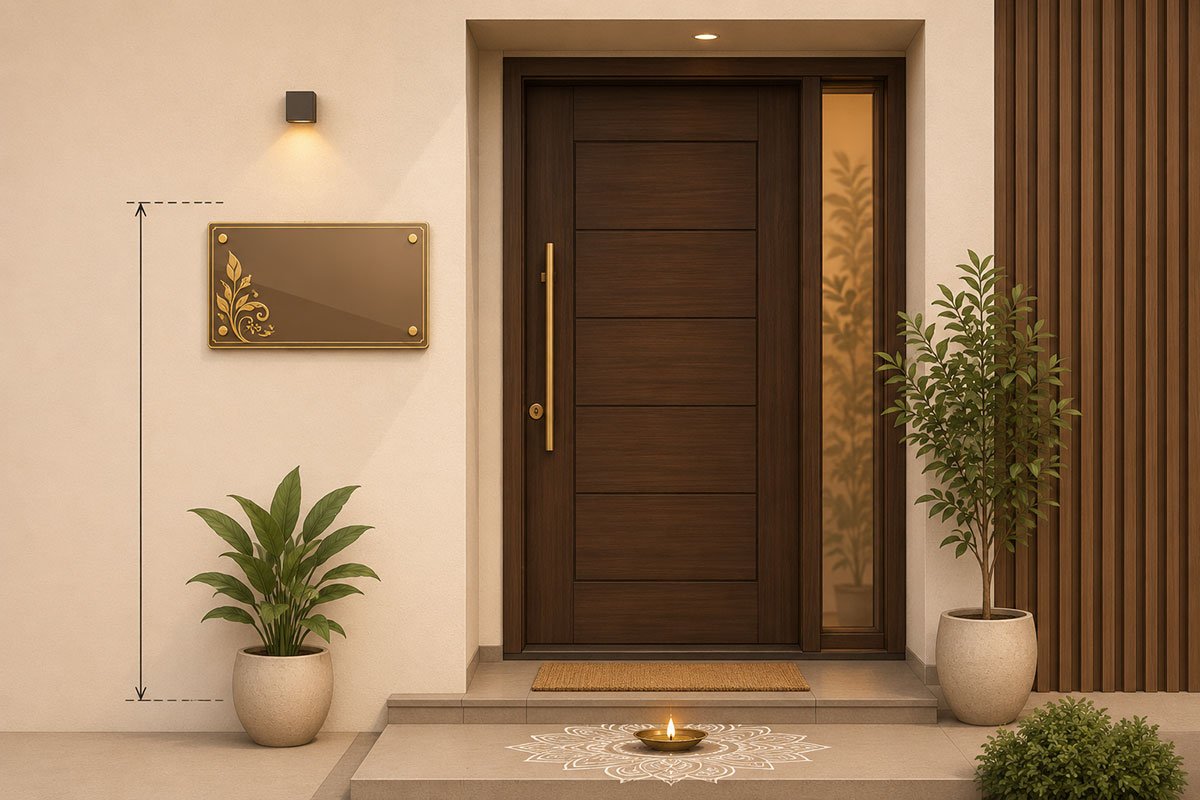
Placement is the part of vastu for name plate that people most often get wrong, and it’s the easiest to fix.
Left or Right of the Main Door?
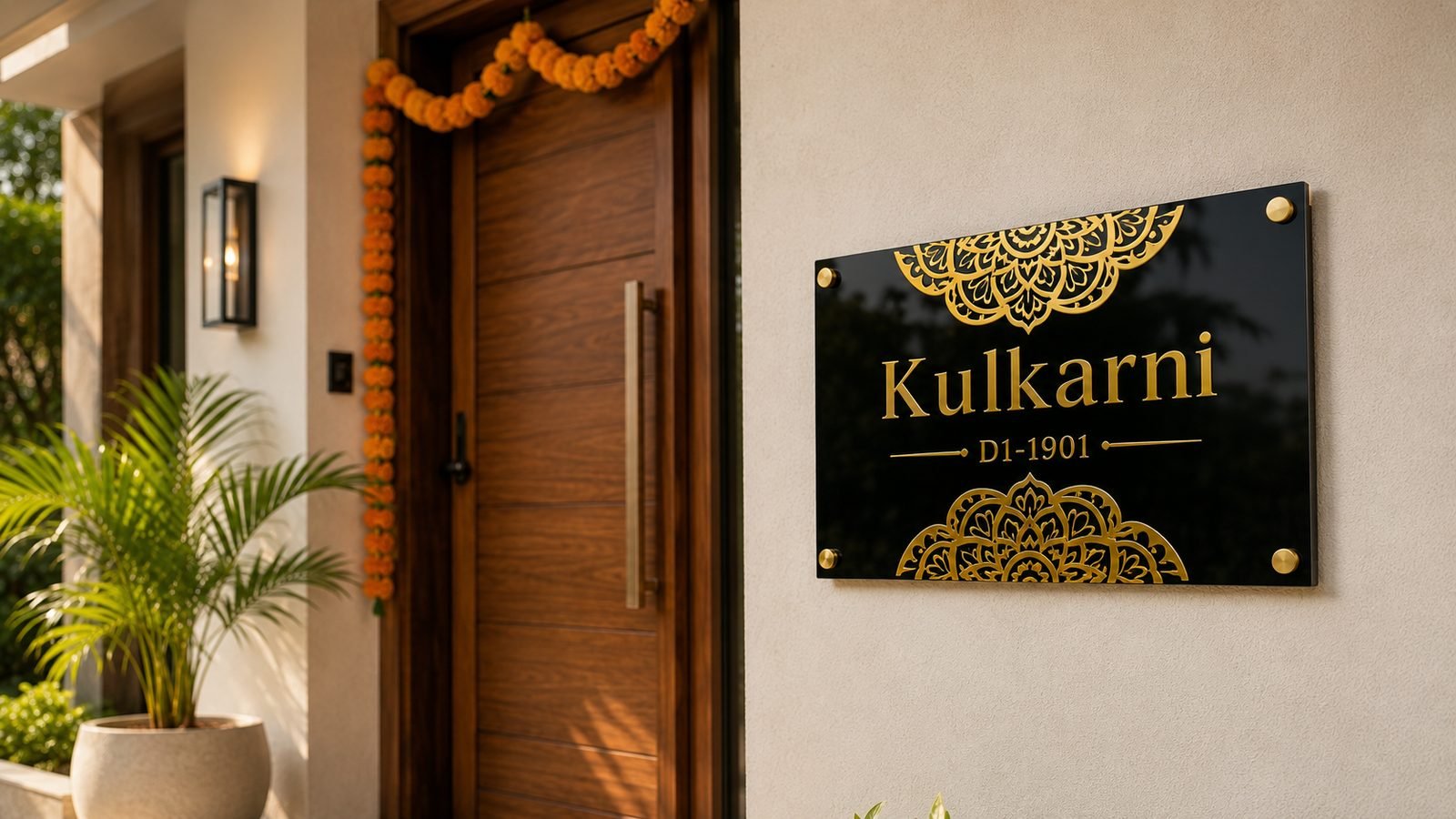
The most widely-followed guidance is to place the name plate on the wall or door to the left of the main entrance as you look at it from outside, especially for north- and east-facing homes. Many Vastu practitioners favour the left because it’s associated with stability and the moon’s calming energy. That said, you’ll find respected experts who recommend the right side — so if your entrance geometry or an existing fixture makes the right side the sensible choice, that is perfectly acceptable. The non-negotiable part is this: the plate should be clearly visible, unobstructed, and fixed firmly. Consistency and clarity matter more than an inch either way.
The Ideal Height — the Eye-Level Rule
Fix your name plate at eye level, roughly 5 to 5.5 feet from the ground. At this height it is easy to read, catches natural light, and sits in the visitor’s line of sight without them having to look up or stoop. Avoid mounting it too high (it feels distant and formal) or near the floor (considered inauspicious and impractical). If two nameplates share an entrance — say, a family plate and a flat number — keep them aligned and uncluttered.
Inside or Outside the Gate?
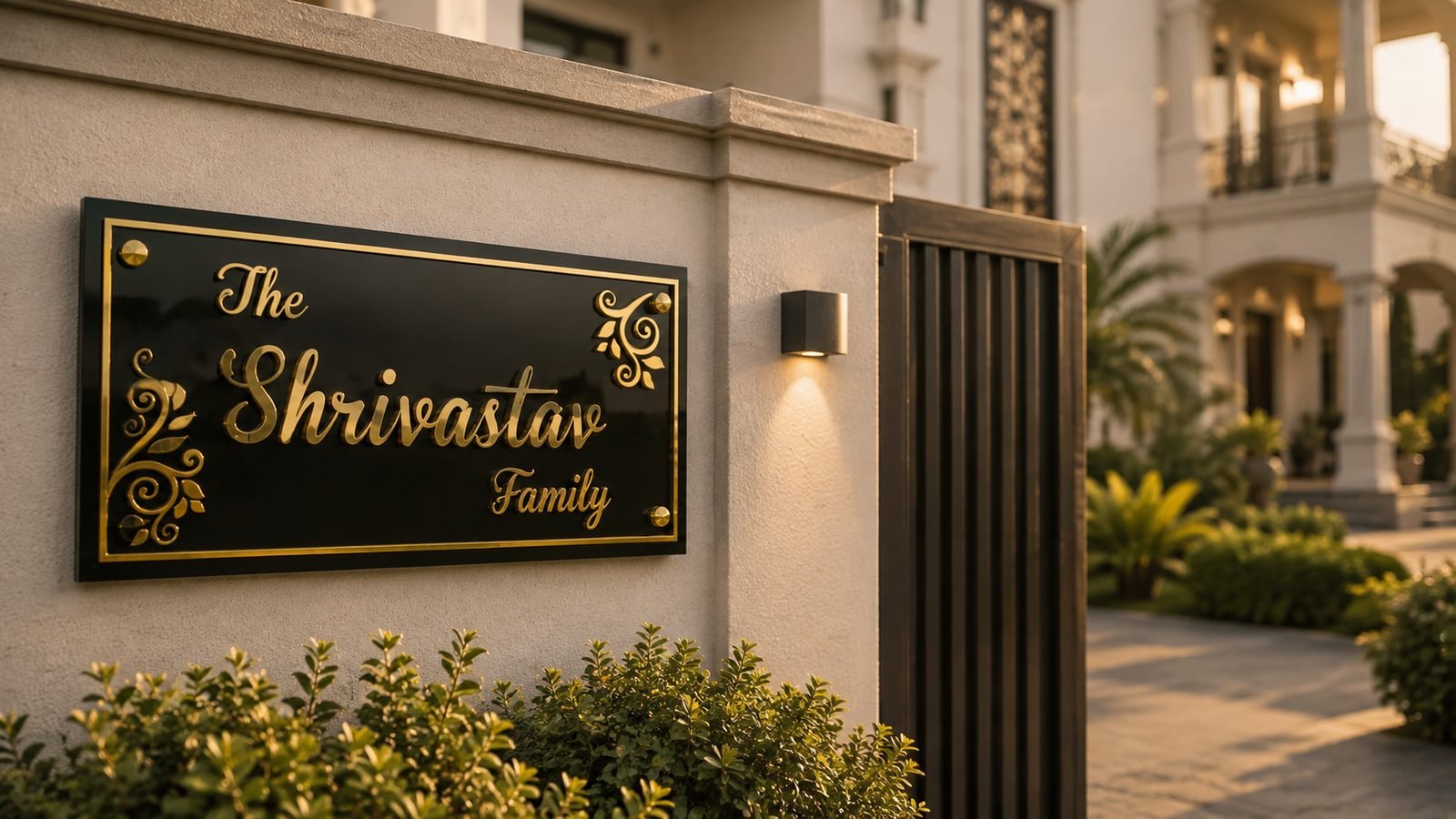
For an independent house or villa with a compound, you can have two touchpoints: a larger plate on the main gate and a personal one on the main door. The gate plate handles visibility from the street; the door plate carries the warmth. For a flat, the single door plate does both jobs, so it’s worth investing in one that reads well up close.
Placement Mistakes to Avoid
Keep the plate out of dark, tucked-away corners. Don’t hide it behind a shoe rack, an overgrown plant or a bunch of hanging wires. Make sure it isn’t placed under a staircase or below the level of the door handle. And never leave a broken, peeling or faded plate up — in Vastu a damaged name plate is thought to invite stagnation, and honestly, it just looks unloved.
The Best Direction for a Name Plate as per Vastu
The direction your main door faces decides much of the guidance around material and colour. Here’s how the four common facings are traditionally treated.
North-Facing Homes (the direction of Kubera, lord of wealth)
North is considered excellent for prosperity. A metal name plate — brass, bronze or steel — suits this facing beautifully, ideally in metallic, green or blue tones. If you prefer a modern look, a matte plate with gold or silver lettering keeps the metallic association intact.
East-Facing Homes (the direction of the rising sun)
East is linked to health, clarity and good relationships. Wood, or a wood-finish plate, in brown or green tones is the classic recommendation here. A warm wooden or wood-pattern nameplate feels right at an east-facing door.
North-East — the Ishanya Corner (the most auspicious)
If your entrance falls in the north-east, you’re fortunate — this is the holiest zone in Vastu. Keep the plate light and clean: white or pale backgrounds, simple lettering, and if possible a subtle sacred symbol like Om or Ganesha. Make sure this corner is always well-lit and clutter-free.
South & West-Facing Homes (with simple remedies)
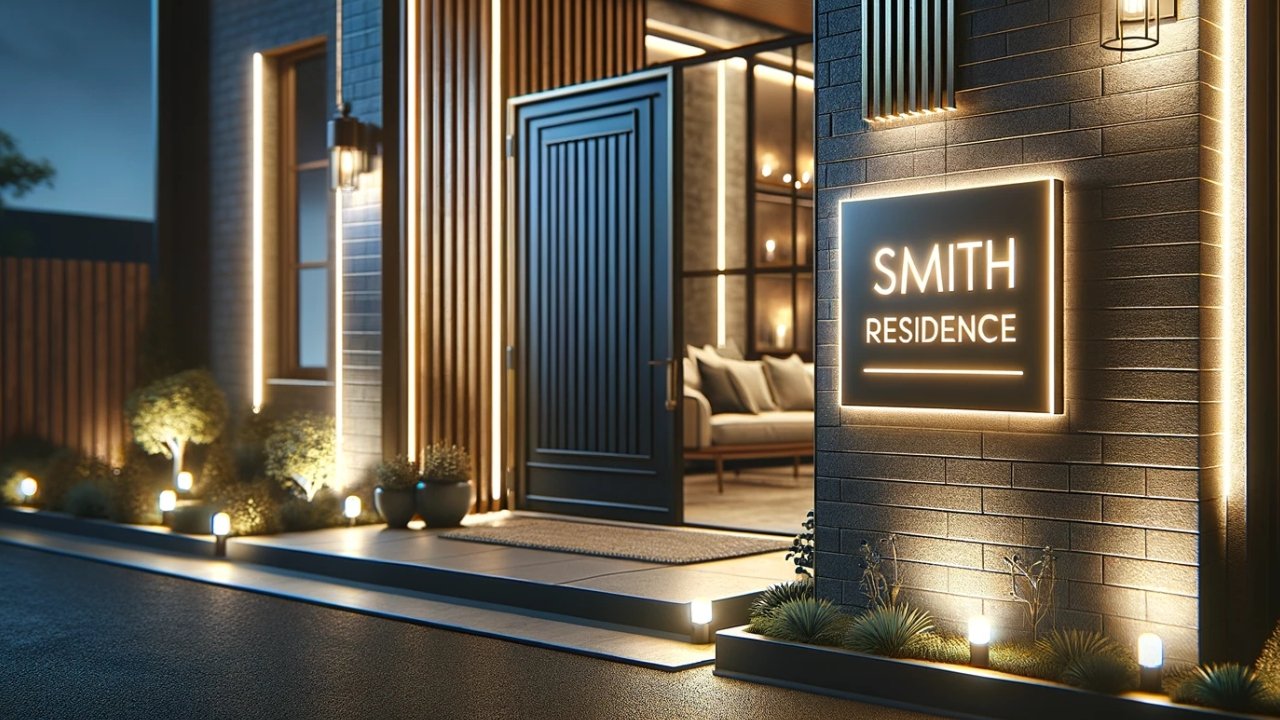
South and west facings aren’t ‘bad’ — they simply call for grounding, protective choices. For the south, deeper tones (red, maroon, coral) and metal or copper work well. For the west, white, grey or silver with a sturdy metal or wood plate is ideal. A small Ganesha or Swastika motif is a commonly-used remedy to balance these directions. Good lighting at the entrance matters even more here — a warm LED-lit name plate is both a Vastu-friendly and a genuinely elegant fix.
Name Plate Colour as per Vastu (Direction-Wise Chart)
Colour ties your plate to the element that governs each direction. Use this as a quick reference — the goal is harmony with the facing, not a rigid match.
| Main door faces | Ideal material | Suggested colours | Quick note |
|---|---|---|---|
| North | Brass, bronze, steel | Green, blue, metallic gold | Direction of wealth — metals shine here |
| North-East | Wood or brass | White, cream, light yellow | Most auspicious; keep it clean & lit |
| East | Wood / wood-finish | Brown, green, warm tones | Morning-sun direction; wood suits best |
| South-East | Metal | Red, orange, pink | Fire zone; warm tones balance it |
| South | Metal, copper | Red, maroon, coral | Grounding colours add strength |
| South-West | Heavy wood | Yellow, beige, brown | Stability zone; solid, earthy plates |
| West | Steel or wood | White, grey, silver | Cool, neutral tones work well |
| North-West | Metal | White, cream, grey | Supports movement & connections |
A universal tip regardless of direction: high contrast between the background and the letters (dark plate with gold letters, or a white plate with black/gold) keeps the name readable from a distance — which is the whole point of a name plate.
The Best Material for a Vastu Name Plate
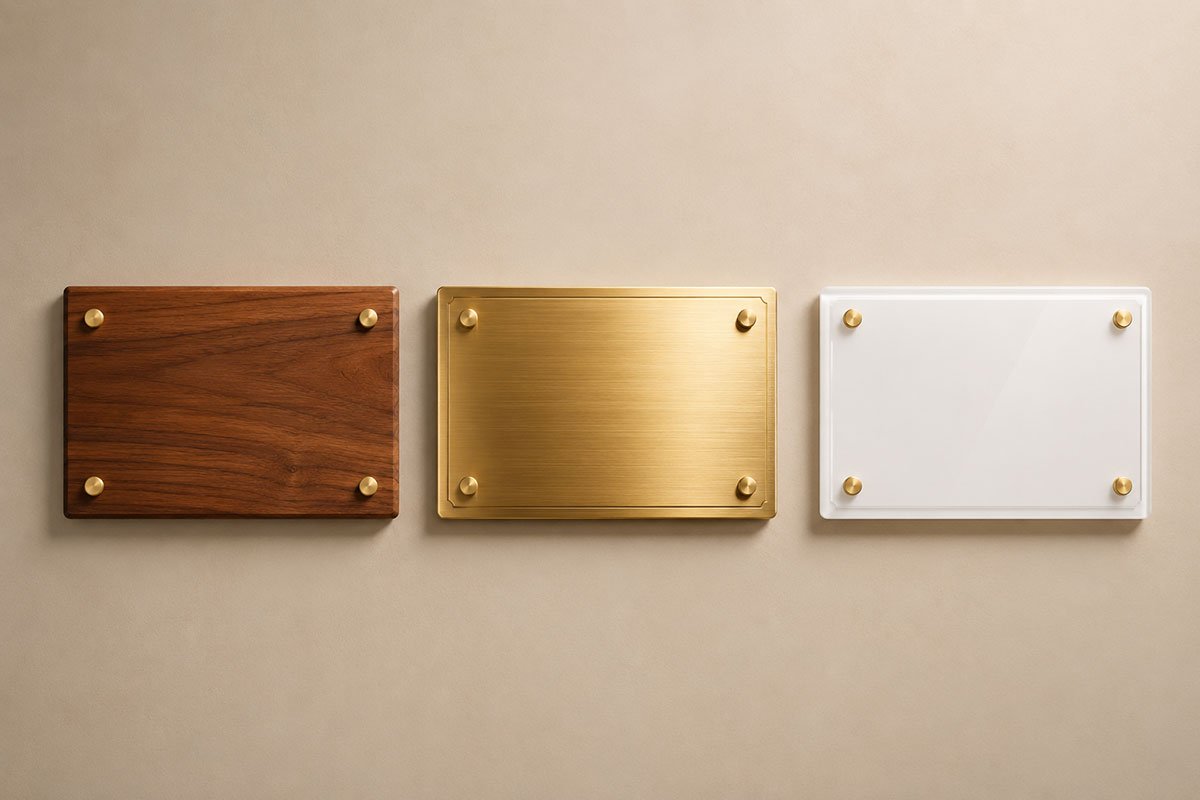
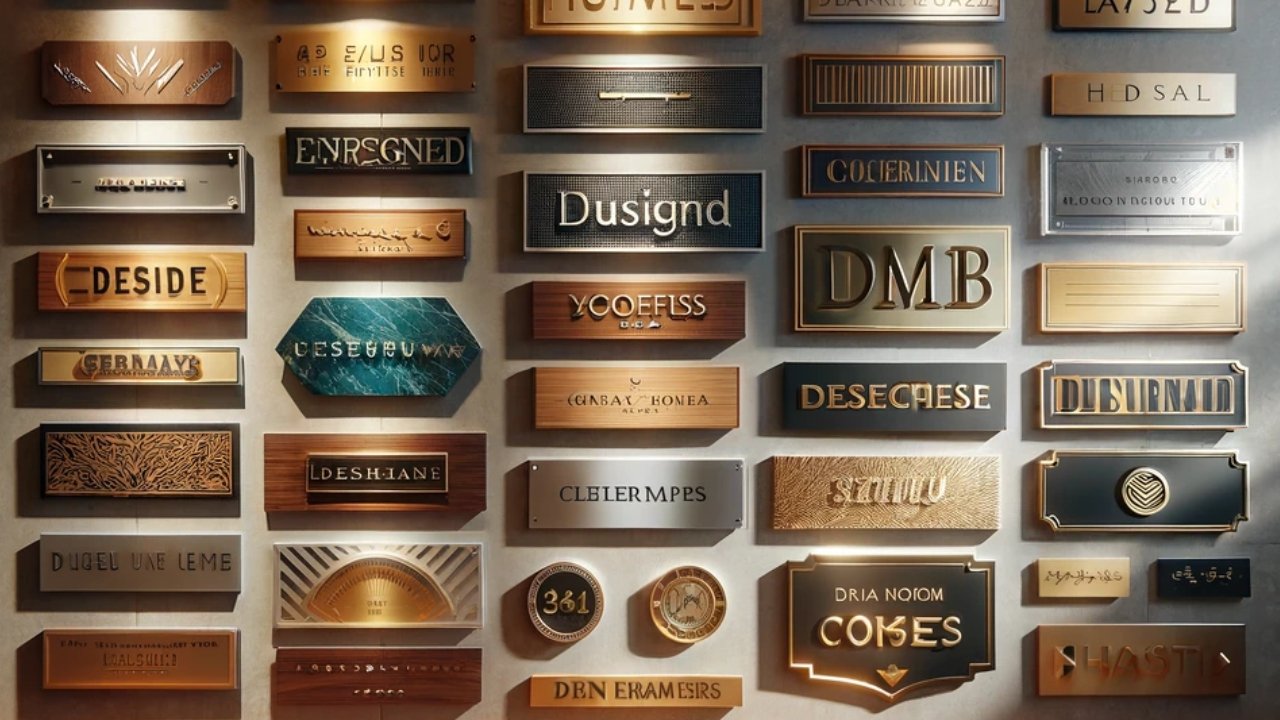
Material is where Vastu tradition and modern durability meet. If you want a deeper comparison beyond Vastu, our guide on how to choose the right name plate material covers it in detail. Here’s the short version.
Wood (best for East & North-East)
Wood carries warm, natural, satvik energy and is traditionally the most auspicious material. It suits east and north-east entrances and pairs wonderfully with brass or golden lettering. Our wooden name plate range is designed for exactly this classic look.
Metal — Brass & Steel (best for North & West)
Brass has been the temple-and-home metal of India for centuries; it’s associated with wealth and permanence, making it ideal for north-facing doors. For a contemporary, low-maintenance take, a stainless-steel-look laser-cut plate gives the same protective, grounding feel with none of the polishing.
Acrylic — the Modern All-Rounder
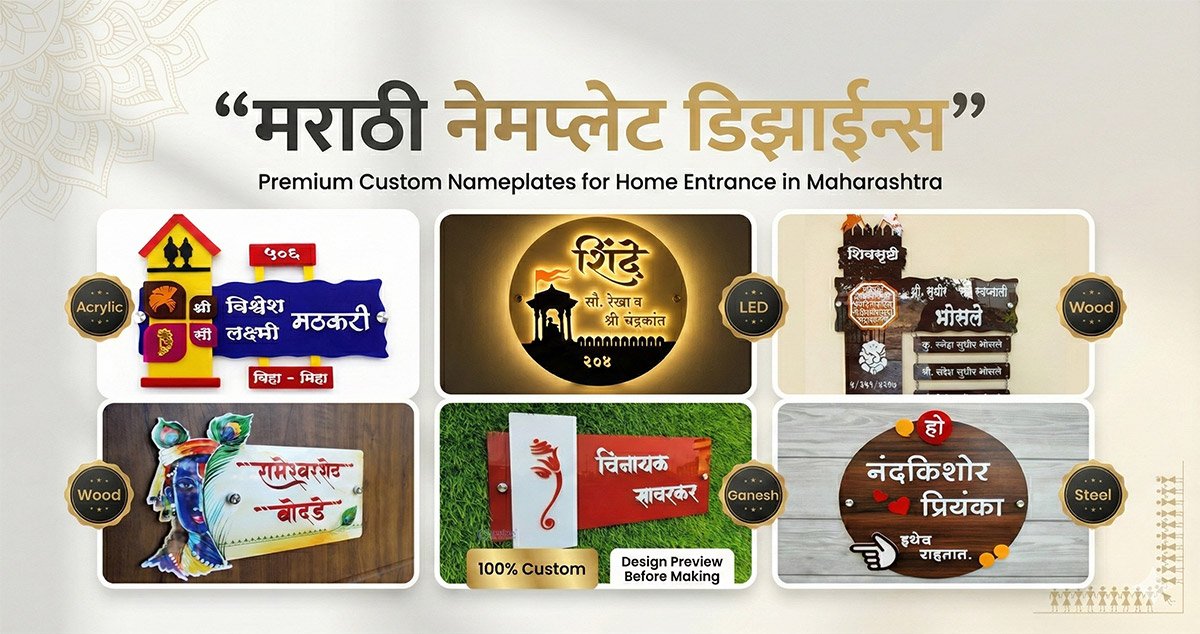
Here’s an honest, practical point: most of us today live in flats where the door faces whatever direction the builder decided, and premium wood or brass isn’t always feasible outdoors. This is where acrylic has quietly become the most popular choice in Indian homes. It’s weatherproof, lightweight, available in every colour, and can be finished to mimic wood grain, metal or a clean matte look — so you can honour the spirit of the direction-wise guidance (right colour, right symbol, clean and bright) even when you can’t change the material of the door itself. Our acrylic name plate collection is our most-loved range for precisely this reason, with laser-cut 3D letters that read beautifully at eye level. For design inspiration, browse our 25+ acrylic name plate designs for home.
What to Avoid
Traditionally, plastic and anything that rusts, cracks or fades quickly is discouraged — not for mystical reasons alone, but because a deteriorating plate defeats the purpose. Choose a material rated for outdoor Indian weather and you satisfy both Vastu and reality.
Auspicious Symbols and Elements
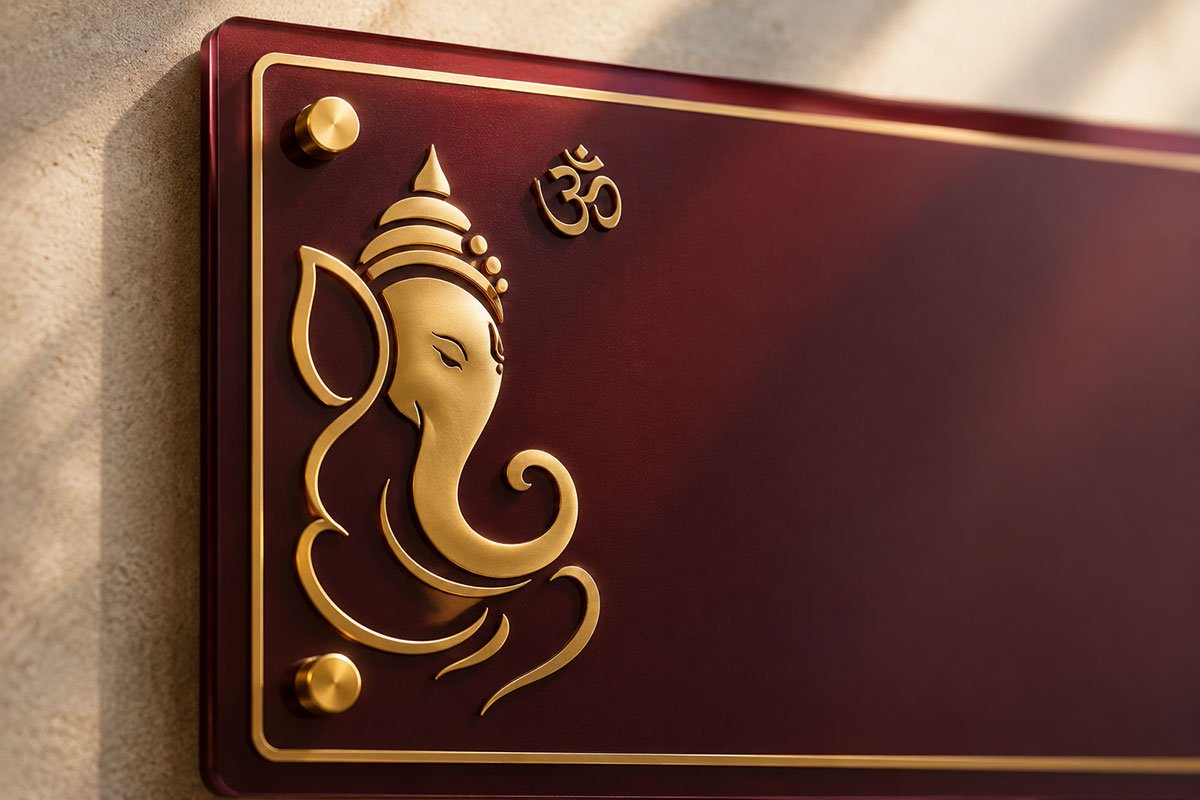
Adding a sacred symbol is one of the simplest ways to make a name plate feel auspicious, and it’s especially recommended for south and west facings as a balancing element.
- Ganesha — by far the most popular. As the remover of obstacles, Lord Ganesha at the entrance is considered deeply auspicious. Our Ganesha border name plate and the compact Ganesha mirror-gold plate are made for this.
- Om (ॐ) — a universal symbol of positive vibration; understated and elegant on a light plate.
- Swastika — an ancient Indian emblem of good fortune and well-being (note: the traditional right-facing Hindu Swastika, entirely distinct in meaning and origin).
- Kalash & Lotus — symbols of abundance and purity; beautiful as a corner motif.
- Shubh–Labh and Lakshmi’s feet (paduka) — traditionally shown facing inward, symbolising wealth entering the home.
- A serene deity motif such as a Buddha-themed plate for a calm, meditative entrance.
One symbol, tastefully placed, is plenty. The name should remain the hero of the plate.
Name Plate Vastu for Flats and Apartments
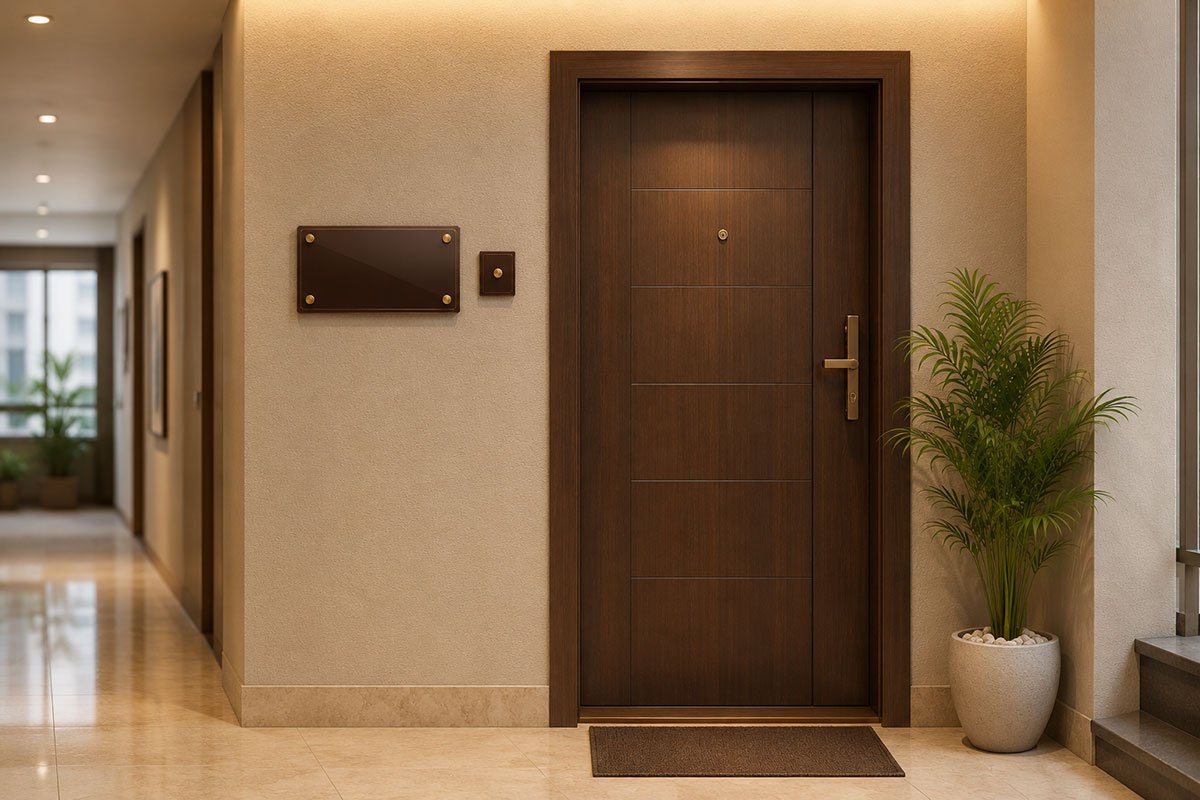
If you live in an apartment, you already know the catch: you can’t choose which way your door faces, and society rules may limit size and drilling. The good news is that vastu for name plate in a flat is less about the door’s direction and more about the plate itself. Here’s what actually matters:
- Keep it clean, bright and complete. A crisp, well-lit plate at eye level does most of the Vastu ‘work’ in a flat.
- Favour a light, positive colour and add a small Ganesha or Om if you’d like a balancing element — an easy remedy when you can’t control the facing.
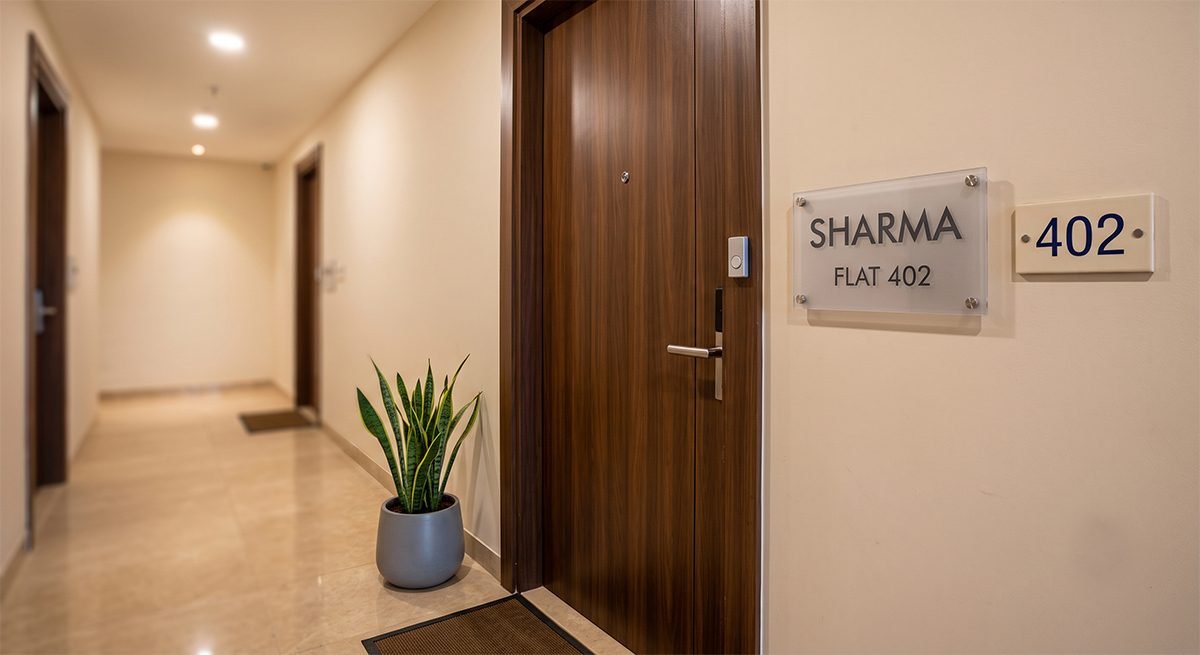
- Choose acrylic. It’s compact, adhesive-friendly (no heavy drilling), weatherproof for open corridors, and society-appropriate in size. A door name plate with clean golden letters or a customisable door plate works perfectly.
- Add your flat number if your society uses one — it’s practical and keeps the plate uncluttered.
For a broader look at what suits apartments specifically, our guide on choosing the right nameplate for your home or office is a useful next read. For flat-specific ideas, see our guide to name plate designs for flats and apartments.
Quick Vastu Do’s and Don’ts
✅ Do
- Place it at eye level (5–5.5 ft), clearly visible and firmly fixed
- Keep it clean, well-lit and free of dust, cobwebs or clutter
- Use the full family name, spelled correctly and easy to read
- Match colour/material to your door’s direction where you can
- Repair or replace a damaged plate promptly
❌ Don’t
- Hang a cracked, rusted, peeling or faded plate
- Hide it behind plants, a shoe rack, wires or a dark corner
- Place it below the door handle or at floor level
- Overcrowd it with too many symbols or fonts
- Leave a misspelt or half-lit name at your entrance
How iCreations Helps You Get It Right
At iCreations, every plate is made to order in our Maharashtra workshop, which means you’re never forced to compromise on the Vastu details that matter to you. You choose the material and finish (wood, metal-look or weatherproof acrylic), the colour suited to your door’s direction, the size for your space, and any symbol — Ganesha, Om, Swastika or a motif of your own. Our laser-cut 3D lettering keeps the name sharp and readable at eye level, and every plate is built to survive real Indian weather, from Chennai humidity to Delhi summers.
Before you order, you can preview your name on the design, and our team is a WhatsApp message away if you’d like a quick recommendation on colour or size for your facing.
Ready to design a Vastu-friendly entrance? Explore our acrylic name plates, browse the wooden collection, or message us on WhatsApp with your door direction and we’ll suggest the ideal plate for your home.
Frequently Asked Questions
A few quick answers to the most common vastu for name plate questions we hear from customers.
Which direction is best for a name plate as per Vastu? The north, east and north-east are considered the most auspicious directions for a name plate. North favours prosperity, east brings positive morning energy, and the north-east (Ishanya) is the holiest zone. If your door faces south or west, use grounding colours and a Ganesha or Swastika motif to balance the energy.
Should a name plate be on the left or right of the main door? Most Vastu practitioners recommend the left side of the main door as you face it from outside, as it’s linked to stability. The right side is also acceptable if your entrance layout suits it better. What matters most is that the plate is clearly visible, unobstructed and firmly fixed.
What is the ideal height to place a name plate? Fix your name plate at eye level, roughly 5 to 5.5 feet from the ground. At this height it’s easy to read, catches natural light, and sits comfortably in a visitor’s line of sight. Avoid placing it too high or near the floor.
Which colour name plate is good as per Vastu? Match the colour to your door’s direction: green or metallic for north, brown or green for east, white or cream for the north-east, and deeper reds or maroons for the south. As a rule, keep strong contrast between the background and lettering so the name stays readable.
Which material is best for a Vastu name plate? Wood is traditionally the most auspicious material and suits east and north-east doors, while brass and steel suit north and west facings. For flats and outdoor durability, weatherproof acrylic is the practical modern choice — it can mimic wood or metal and be finished in any Vastu-friendly colour.
Is it good to put Ganesha on a name plate? Yes. Lord Ganesha, the remover of obstacles, is considered highly auspicious at the entrance and is one of the most popular symbols on Indian name plates. It’s especially recommended as a balancing element for south- and west-facing doors.
Can I follow name plate Vastu in a rented flat? Absolutely. Since you can’t change the door’s direction in a flat, focus on the plate itself — keep it clean, bright, at eye level, in a positive colour, and add a small Ganesha or Om if you’d like. A lightweight, adhesive-friendly acrylic plate is ideal for rented homes.
What should I avoid on my name plate as per Vastu? Avoid a cracked, rusted, faded or crooked plate, and never hide it behind plants, footwear or in a dark corner. Skip misspelt names, overcrowded designs and floor-level placement. A damaged or hidden name plate is believed to block positive energy from entering the home.
Vastu for Name Plate: Key Takeaways
Vastu for name plate really comes down to three ideas: put it where it can be seen (eye level, left of the door, well-lit), dress it in colours and materials that suit your door’s direction, and keep it clean, complete and cared for. Add a Ganesha or Om if your facing needs balancing, and you’ve done everything the tradition asks — while ending up with an entrance that simply looks and feels welcoming.
Your name plate is the first hello your home offers. Make it a warm one. When you’re ready to design yours — in the right material, colour and size for your home — explore the iCreations collection or reach out on WhatsApp, and we’ll help you create an entrance that welcomes both guests and good fortune.
Related: Planning your budget? Name Plate Price in India: 2026 Cost Guide.
Related: For independent homes, see our main gate name plate designs for villas & bungalows.
Related: Gifting a new home? See our griha pravesh gift ideas.